You learn “tudo bem” in Portuguese class. You land in Rio, and someone greets you with “e aí?” instead. Your friend says “valeu.” Textbook Portuguese and real Brazilian Portuguese aren’t the same language.Brazilian slang, or “gírias,” fills everyday conversation across Brazil. People use it in greetings, texts, and casual chats, no matter the region.
This guide covers the words you’ll hear the most, sorted by how people actually use them, so you sound like a local instead of a textbook.
What Is Brazilian Slang? (Quick Answer)
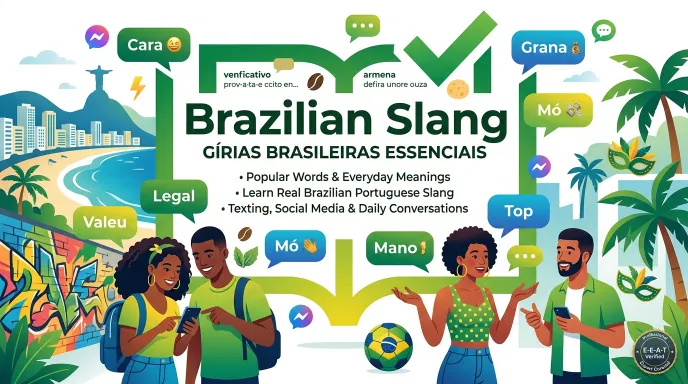
Brazilian slang is the everyday, informal Portuguese that Brazilians use in real conversation words like “legal” (cool), “valeu” (thanks), “cara” (dude), and “beleza” (okay/cool).
It’s different from European Portuguese slang, and it shows up everywhere: greetings, texting, TV, and daily chats. Most of these words work across Brazil, though a few phrases lean more regional.
Quick Answer Table
| Slang Word/Phrase | Meaning |
| Legal | Cool, great, good |
| Beleza | Okay, cool, “deal” |
| Valeu | Thanks (casual) |
| Cara | Guy, dude |
| E aí? | What’s up? |
| Tudo joia | Everything’s good (slangier version of “tudo bem”) |
| Bacana | Cool, great |
| Nossa | Wow, oh my |
| Sei lá | Who knows, I don’t care |
| Bora | Let’s go |
Everyday Greetings and Small Talk
E aí? literally means “and there?” but Brazilians use it to say “what’s up?” It replaces the more formal “Como vai?” in casual settings.
- E aí, tudo bem? (What’s up, everything good?)
Tudo joia works like “tudo bem,” but sounds more casual. It literally means “everything’s jewel,” and it’s a relaxed way to say things are going well.
- Tudo joia por aqui, e você? (All good here, and you?)
Beleza literally means “beauty,” but Brazilians use it as “okay,” “cool,” or even a casual greeting.
- Nos vemos às 9. Beleza! (See you at 9. Cool!)
Ways to Say “Cool” or “Great”
Legal is the most common word for “cool” across Brazil, used from north to south. It literally means “legal,” but it describes anything good, from a movie to a new phone.
- Esse show foi muito legal! (That concert was so cool!)
Bacana works the same way as “legal,” just slightly less common.
- Que bacana o seu carro novo! (Your new car is so cool!)
A few other, slightly more regional or informal ways to say “cool” include maneiro, da hora, top, and sinistro all mean roughly the same thing, though some sound more current with younger speakers than others.
Talking About People
Cara literally means “face,” but Brazilians use it constantly to mean “guy” or “dude.” People also use it as a filler word, similar to how English speakers say “man.”
- Esse cara não para de falar. (This guy won’t stop talking.)
- Cara, você não vai acreditar nisso. (Dude, you won’t believe this.)
Véi (short for “velho,” meaning “old”) means “dude” too, and works regardless of the other person’s age or gender.
- Véi, que dia difícil. (Dude, what a hard day.)
Cabeça-dura literally means “hard head.” Brazilians use it to describe someone stubborn who won’t change their mind.
- João é um cabeça-dura, nunca muda de ideia. (João is so stubborn, he never changes his mind.)
Pão-duro literally means “hard bread,” but it actually describes someone stingy with money the Brazilian version of “cheapskate.”
- Ele é um pão-duro, nunca paga a conta. (He’s so cheap, he never pays the bill.)
Money, Plans, and Everyday Life
Grana is casual slang for “money.”
- Tô sem grana hoje. (I don’t have any money today.)
Rolê describes a casual outing or hangout.
- Vai ter um rolê depois da aula. (There’s a hangout after class.)
Bora, short for “vamos embora” (let’s go), works as a quick way to rally people to leave or start something.
- Bora, pessoal! (Let’s go, everyone!)
Dar um jeito means to figure something out or find a workaround, no matter the problem.
- Não se preocupa, a gente dá um jeito. (Don’t worry, we’ll figure it out.)
Expressing Feelings and Reactions
Nossa works as an all-purpose exclamation for surprise, excitement, shock, or disbelief.
- Nossa, que susto! (Wow, what a scare!)
Sei lá literally means “I don’t know,” but tone changes its weight. It can mean a genuine “who knows?” or a sharper “I don’t care.”
- Por que ele fez isso? Sei lá. (Why did he do that? Who knows.)
Tô nem aí is a stronger way to say “I don’t care” or “whatever.”
- Ele falou isso? Tô nem aí. (He said that? I don’t care.)
De boa means relaxed, chill, or “it’s all good.”
- Hoje eu só quero ficar de boa em casa. (Today I just want to chill at home.)
Pagar mico means to embarrass yourself or make a fool of yourself.
- Cantei mal no karaokê e paguei mico. (I sang badly at karaoke and embarrassed myself.)
Texting Abbreviations
Brazilian Portuguese has its own texting shortcuts, similar to “idk” or “brb” in English.
- tbm short for “também” (too, also)
- vc short for “você” (you)
- blz short for “beleza” (okay/cool)
Example: Eu tbm fui ao cinema. (I also went to the movies.)
Brazilian Slang vs. European Portuguese Slang

Brazilian and European Portuguese slang differ quite a bit, even though both speak the same base language. In Portugal, the top word for “cool” is fixe, not “legal.”
People there also say giro/gira for “cute” or “interesting,” and pá/epá as a filler word similar to “man” or “dude.”
If you use Brazilian slang in Portugal, or the other way around, locals will still understand you, but it’ll sound noticeably out of place.
When to Avoid Brazilian Slang
- Formal writing, business emails, or academic work stick with standard Portuguese instead.
- First meetings in professional settings save slang for once you know the relationship is casual.
- Conversations with older or more formal speakers some slang, especially texting abbreviations, may not land well outside casual peer groups.
Verdict on professional use: Brazilian slang belongs in casual conversation, texting, and social settings. Switch to standard Portuguese in interviews, official writing, or formal correspondence.
Common Mistakes
- Mixing up Brazilian and European Portuguese slang. “Legal” sounds natural in Brazil, but “fixe” is the word in Portugal. They aren’t interchangeable.
- Using texting abbreviations in formal writing. Save “tbm,” “vc,” and “blz” for casual texts, not emails or reports.
- Assuming every slang word works everywhere in Brazil. Most of these terms are widely understood, but a few carry more weight in specific regions or age groups.
- Overusing slang with people you just met. It can come off as too casual before you know the relationship.
Key Takeaways
- Brazilian slang, or “gírias,” fills everyday conversation across the country
- Legal, bacana, and beleza are common ways to say “cool” or “okay”
- Cara and véi both mean “dude,” regardless of who you’re talking to
- Grana means money, and rolê means a casual hangout
- Brazilian slang differs from European Portuguese slang don’t mix them up
- Save slang for casual settings, not formal writing or first professional meetings
Frequently Asked Questions
1. What is the most common Brazilian slang word? “Legal” is likely the most common, used across Brazil to mean “cool,” “great,” or “good.”
2. What does “beleza” mean in Brazilian slang? It literally means “beauty,” but Brazilians use it to say “okay,” “cool,” or as a casual greeting.
3. Is Brazilian slang the same as European Portuguese slang? No. They differ quite a bit. For example, Brazilians say “legal” for cool, while Portuguese speakers in Portugal say “fixe.”
4. What does “cara” mean in Brazilian Portuguese? It literally means “face,” but as slang, it means “guy” or “dude.” People also use it as a filler word.
5. Can I use Brazilian slang in professional settings? It’s best to avoid it in formal writing, interviews, or first professional meetings. Save it for casual conversations.
6. What does “sei lá” mean? It literally means “I don’t know,” but depending on tone, it can mean a genuine “who knows?” or a sharper “I don’t care.”
7. What’s a casual way to say “thanks” in Brazilian Portuguese? “Valeu” is the informal way to say thanks, more casual than “obrigado.”
8. What does “rolê” mean in Brazilian slang? It means a casual outing or hangout with friends.
Conclusion
Brazilian slang brings Portuguese to life in a way textbooks never fully capture. Learn a handful of these words legal, beleza, cara, valeu, rolê and you’ll follow real conversations far more easily, if you’re in São Paulo, Rio, or anywhere else across Brazil.

Hi, I’m Sophia Bennett, a novelist passionate about creating heartfelt stories filled with romance, emotion, and unforgettable characters. Through my books, I hope to inspire readers and take them on journeys they’ll always remember.