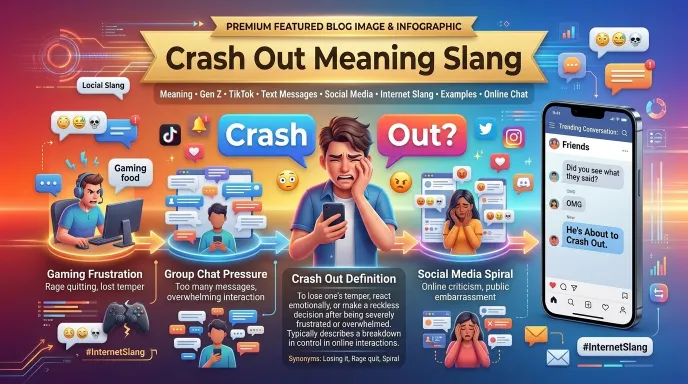
Crash out means to lose control emotionally, often in a dramatic or embarrassing way. It describes someone snapping, breaking down, or overreacting to a stressful situation.
You’ve probably seen “crash out” in a TikTok caption, a tweet, or a group chat after something went wrong. This guide explains what crash out means, where it came from, and how people use it today.
What Does Crash Out Mean? (Quick Answer)
Crash out means losing emotional control, often suddenly and dramatically. It can describe crying, yelling, or acting out after something upsetting happens.
People also use it to describe someone making a bad decision out of anger or stress. Sometimes it’s serious, but often it’s used playfully too.
Quick Answer Table
| Question | Answer |
| Meaning | Losing emotional control, often dramatically |
| Tone | Can be serious or joking |
| Used By | Gen Z, Gen Alpha, students, athletes |
| Platforms | TikTok, Twitter/X, Instagram, Discord |
| Offensive? | Not usually |
| Still Popular? | Yes, especially in 2025 and 2026 |
What Does “Crash Out” Mean?
Crash out describes a moment of losing control. Someone gets so upset, angry, or stressed that they act in a way they normally wouldn’t.
This could mean crying in public, yelling at someone, or making an impulsive decision. Because the phrase captures a very relatable feeling, it spread quickly across social media.
The word doesn’t always mean something dangerous or extreme. Often, it simply means someone had a very bad reaction to a stressful moment.
For instance, someone might “crash out” over a bad grade, a breakup, or losing a game. In each case, the core idea stays the same: an emotional reaction that goes further than usual.
Pronunciation
Crash out is pronounced exactly how it looks: “crash” followed by “out.” There’s no unusual pronunciation, since both words are common English terms used together as a slang phrase.
Origin of Crash Out Slang
The phrase “crash out” existed before its slang meaning, often describing falling asleep suddenly or a vehicle accident. However, its modern slang use grew from a different direction.
Around 2023 and 2024, the phrase started appearing in rap lyrics and TikTok trends, describing emotional outbursts and reckless behavior driven by stress or heartbreak.
From there, the term spread quickly across social media. Students used it to describe stress related meltdowns, while others used it to describe public arguments or emotional videos going viral.
Because the phrase fit so many situations, it became one of the most widely used slang terms of 2025 and 2026.
Why It Became Popular
Crash out became popular because it captures something everyone experiences: losing control under pressure. The phrase is short, dramatic, and easy to apply to almost any stressful situation.
Additionally, viral videos showing real emotional outbursts helped spread the term quickly, since viewers used “crash out” to describe what they were watching.
Social media also rewarded dramatic content, and “crash out” became the perfect caption for it.
As a result, the phrase moved beyond describing single incidents and became a broader way to talk about anyone’s emotional state, even before something dramatic actually happens.
Meaning on TikTok
On TikTok, crash out often appears under videos showing someone yelling, crying, or reacting intensely to bad news.
Captions like “I’m about to crash out” warn viewers that a meltdown is coming. Comments often say things like “she’s crashing out” under videos showing dramatic arguments or emotional reactions.
Meaning on Twitter/X
On Twitter and X, crash out is used constantly to describe public outbursts, celebrity meltdowns, or personal venting threads. Someone might tweet “I’m crashing out rn” while venting about a bad day. Similarly, news about someone’s public argument often gets described as them “crashing out.”
Meaning on Instagram
On Instagram, crash out shows up in captions and story posts, usually describing a stressful day or an emotional moment.
People use it half jokingly, admitting they’re overwhelmed without going into too much detail. It works well because it explains a feeling quickly, without needing a long explanation.
Meaning in Gaming
In gaming spaces, crash out describes a player getting extremely frustrated after a loss. This might involve yelling, quitting suddenly, or making reckless in game decisions out of anger. Teammates might say “he’s crashing out” when someone starts playing recklessly after a string of bad rounds.
Meaning at School
At school, crash out describes stress driven meltdowns, especially around exams or deadlines. A student overwhelmed by homework might say “I’m about to crash out.” Because school stress is so relatable, this use of the phrase spread quickly among students describing shared feelings of pressure.
Meaning in Relationships
In relationships, crash out often describes an emotional reaction to conflict, like an argument or breakup. Someone might say their partner “crashed out” after finding out upsetting news. This use tends to be more serious than the joking, everyday version seen elsewhere online.
Meaning on YouTube
On YouTube, crash out appears often in video titles and comments, especially under reaction videos or clips showing real arguments and emotional moments.
Titles like “she crashed out on live TV” attract clicks, since viewers are curious about dramatic reactions. Comment sections frequently repeat the phrase to describe what happened in the clip.
Meaning in Sports
In sports, crash out describes an athlete or team losing composure after a bad play or a loss. Commentators and fans use it casually to describe visible frustration, like yelling at a referee or storming off the field.
Because sports moments are often broadcast live, this use of the phrase tends to spread quickly whenever a dramatic reaction goes viral.
Cultural Context
Crash out fits into a broader trend of slang describing emotional reactions in a relatable, almost lighthearted way.
Words like “crash out,” “spiral,” and “unravel” all describe similar experiences, though each carries a slightly different tone.
This pattern reflects how younger generations often talk openly about stress and emotions online, turning difficult moments into shared, recognizable experiences rather than something to hide.
When to Use It
Crash out works well in casual conversations, especially with friends who understand the tone. It fits texts, captions, and social media posts describing stress, frustration, or a dramatic reaction.
It also works as a warning, like saying “I’m about to crash out” before venting about something upsetting.
When to Avoid It
Avoid using crash out in formal writing, professional emails, or serious conversations about someone else’s genuine mental health struggles.
Since the phrase can sound dismissive in serious contexts, it’s better to use more direct language when discussing real emotional distress with care.
Positive or Negative?
Crash out usually carries a negative tone, since it describes losing control or acting emotionally. However, it’s not always meant harshly.
Often, people use it about themselves in a self aware, joking way, admitting they’re stressed without judgment. In more serious contexts, though, it can describe a genuinely difficult emotional moment.
Formal or Informal?
Crash out is completely informal. It fits well in texts, social media captions, and casual conversations with friends. On the other hand, it doesn’t belong in professional emails, schoolwork, or formal writing, since it would sound out of place there.
Crash Out vs Meltdown vs Snap
| Term | Meaning |
| Crash Out | Losing emotional control, often dramatically |
| Meltdown | Similar meaning, slightly more clinical sounding |
| Snap | Sudden anger, usually shorter and more explosive |
All three terms describe losing emotional control, but each has a slightly different feel. “Meltdown” sounds a bit more serious or clinical, while “snap” usually describes a short burst of anger. “Crash out,” meanwhile, feels more current and often carries a dramatic, almost theatrical tone online.
Crash Out vs Rage Quit
Another related term is “rage quit,” which specifically describes quitting a game out of anger. Crash out is broader, since it applies to any stressful situation, not just gaming.
Still, the two terms overlap often in gaming spaces, where losing control after a loss might be described as either crashing out or rage quitting.
Common Mistakes Crash Out Meaning Slang
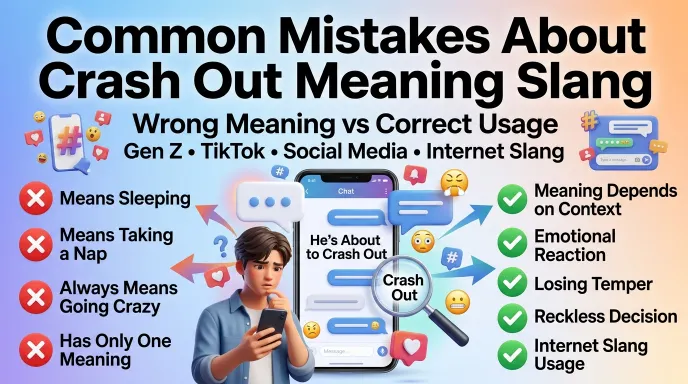
- Assuming it’s always extreme. Sometimes it just means being mildly stressed, not a full breakdown.
- Using it in formal settings. It only fits casual conversations and social media.
- Missing the tone. A joking “I’m crashing out” and a genuinely serious moment can look similar in text, so context matters.
Real Life Examples
Text Message
Zoe: did you see the grade? Ana: yeah I’m literally about to crash out
TikTok Caption
pov: you find out the exam got moved up 😭 I’m crashing out
Twitter/X Post
just found out my flight got cancelled, I’m crashing out fr
Gaming Chat
bro lost his last life and started crashing out in chat
Discord Chat
she’s crashing out over that text he sent, someone check on her
Context Explanation
Each example shows the same basic pattern: something stressful happens, and someone reacts strongly.
Sometimes this reaction is small and joking, like stress over a moved exam. Other times, it describes something more serious, like real emotional distress after upsetting news.
Tone and context usually make the difference clear, since exclamation points, emojis, and joking language tend to signal a lighter use of the phrase.
Is It Still Popular?
Yes, crash out remains extremely popular, especially through 2025 and into 2026. It shows up constantly across TikTok, Twitter/X, and everyday conversations.
Because it captures such a relatable feeling, its popularity hasn’t shown signs of slowing down, though slang trends can shift quickly over time.
Emoji Meaning
There’s no single official emoji for crash out, but a few pair with it often. The crying emoji 😭 shows up constantly, emphasizing the dramatic or stressful tone.
Similarly, the exploding head emoji 🤯 sometimes appears, representing the feeling of losing control entirely.
Key Takeaways
- Crash out means losing emotional control, often dramatically.
- It can describe crying, yelling, or reckless decisions under stress.
- It grew popular through TikTok and social media around 2023 to 2024.
- It’s informal and mostly used by Gen Z and Gen Alpha.
- It can be serious or joking, depending on context.
FAQs
What Does “Crash Out” Mean in Gen Z?
Answer: In Gen Z slang, “crash out” means to lose emotional control, overreact, or have a public meltdown because of stress, anger, or frustration. It is commonly used on TikTok, X (Twitter), and in online conversations.
Why Is Gen Z Saying “Crashing Out”?
Answer: Gen Z uses “crashing out” to describe someone who is breaking down emotionally, acting impulsively, or reacting dramatically to a situation. The phrase is often used humorously in memes, although it can also describe genuine emotional overwhelm.
What Does “TikTok Crash Out” Mean?
Answer: On TikTok, “crash out” refers to someone having a dramatic emotional reaction, losing their composure, or making impulsive decisions. Creators often use the phrase in funny videos, reaction clips, and memes.
What Does It Mean If You Crash Out?
Answer: If you crash out, it means you lose your emotional control, become overwhelmed, or react in an extreme way. Depending on the context, it can describe anything from a brief outburst to a complete emotional meltdown.
What Does “Crash Out” Mean on Urban Dictionary?
Answer: On Urban Dictionary, “crash out” is generally defined as having an emotional meltdown, losing control, or acting recklessly because of stress or anger. Since the definitions are user-submitted, they may vary slightly, but the overall meaning is consistent.
What Does “Crash Out” Mean in a Relationship?
Answer: In a relationship, “crash out” means having an emotional outburst during an argument or reacting impulsively because of frustration, jealousy, or stress. It often describes losing your temper instead of staying calm.
What Does “Crash Out” Mean on TikTok?
Answer: On TikTok, “crash out” usually means having a meltdown, becoming emotionally overwhelmed, or reacting dramatically. The term is popular in memes, trending videos, and Gen Z humor.
Crash Out or Erase – What’s the Difference?
Answer: Crash out and erase have completely different meanings. Crash out means to lose emotional control or have a meltdown, while erase means to remove, delete, or wipe something away, such as text, files, or memories.
Is It “Crashout” or “Crash Out”?
Answer: “Crash out” (two words) is the correct and most widely used spelling in Gen Z slang. Although some people write “crashout” as one word on social media, “crash out” is the more common and accepted form.
What Does “Crash Out” Mean in Slang on Reddit?
Answer: On Reddit, “crash out” usually means having an emotional breakdown, overreacting, or making reckless decisions because of stress or frustration. While the wording may vary between communities, the core slang meaning remains the same.
Conclusion
Crash out started as a way to describe emotional outbursts online, and quickly became one of the most widely used slang phrases around.
It captures a feeling everyone understands: losing control under pressure, If that means crying, yelling, or making an impulsive decision. You might hear it after a bad exam, a lost game, or a stressful text conversation.
Now you know exactly what crash out means, and how people use it across social media and everyday conversation.
Discover More Articles!
Sale Spanish Slang Meaning: What Does “Sale” Really Mean?
Got Slang Meaning: Definition, Examples & Everyday Usage
Fluffy Meaning in Slang: Definition, Examples & Usage

Hi, I’m Sophia Bennett, a novelist passionate about creating heartfelt stories filled with romance, emotion, and unforgettable characters. Through my books, I hope to inspire readers and take them on journeys they’ll always remember.