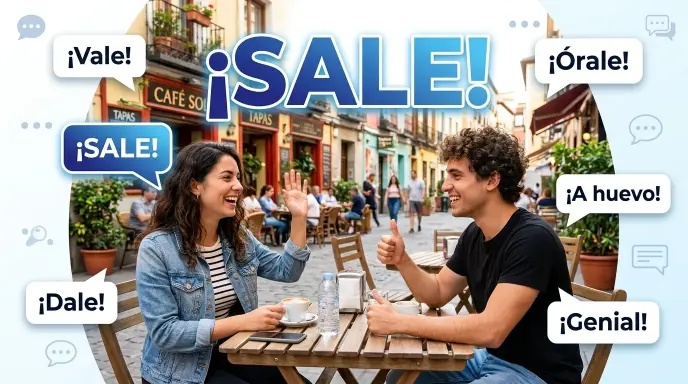
Sale in Spanish slang most commonly means “come out,” “leave,” “go ahead,” or “let’s go,” depending on the conversation and tone.
If you’ve seen this word in TikTok videos, text messages, or chats with native Spanish speakers, you may wonder why it appears so often. The truth is that sale is one of the most versatile slang expressions in everyday Spanish.
It can encourage someone, show agreement, or tell a person to get moving, all with a single word. However, its exact meaning changes based on context, region, and the speaker’s intention.
In this guide, you’ll learn what sale really means in Spanish slang, when to use it, and how native speakers use it naturally in daily conversations.
Understanding “sale spanish slang: Different Meanings by Context
In Spanish slang, sale means “okay,” “deal,” “sounds good,” or “agreed.” It is especially common in Mexico, where people use it to accept plans, confirm arrangements, or respond positively in everyday conversations. Although sale is also a form of the verb salir, its slang meaning depends on the context and is widely used in casual speech.
What Does “Sale” Mean in Spanish Slang?
In everyday conversation, sale is an informal expression that shows agreement or acceptance. Depending on the situation, it can have several English equivalents.
Common Meanings of “Sale”
| Spanish Slang | English Meaning | When It’s Used |
| Sale | Okay | Accepting an idea |
| Sale | Sounds good | Confirming plans |
| Sale | Deal | Agreeing to an arrangement |
| Sale | Sure | Casual conversations |
| Sale | Agreed | Everyday texting |
Although each translation is slightly different, they all express the same idea you agree with what someone has said.
For example:
Friend: ¿Nos vemos mañana?
(Should we meet tomorrow?)
You: Sale.
Meaning:
“Okay.”
Is “Sale” Really Slang?
Yes but only in informal conversations.
Grammatically, sale is the third-person singular form of the verb salir, which means:
- He leaves
- She goes out
- It comes out
However, when someone replies with sale by itself, they aren’t talking about leaving. Instead, they’re using a casual expression that means “okay” or “deal.”
Therefore, context is what changes the meaning.
Where Is “Sale” Commonly Used?
The slang meaning of sale is most popular in Mexico. You’ll hear it in everyday conversations among friends, classmates, coworkers, and family members.
Additionally, it appears frequently on:
- TikTok
- Snapchat
- Facebook Messenger
- Text messages
- Casual phone calls
Some people in Central America also use it, although regional preferences vary.
Meanwhile, speakers in Spain usually say vale, while people in Argentina often use dale instead.
Different Meanings of “Sale” in Spanish Slang
Although sale always shows agreement, its meaning changes slightly depending on the conversation.
Sale = Okay
This is the most common use.
Someone makes a suggestion, and you accept it.
Example
Ana: Vamos al cine esta noche.
Luis: Sale.
Meaning:
“Okay.”
Because it’s short and friendly, it sounds completely natural.
Sale = Sounds Good
People also use sale when confirming plans.
Example
Carlos: Nos vemos a las ocho.
María: Sale.
Meaning:
“Sounds good.”
As a result, the conversation moves forward without needing a longer reply.
Sale = Deal
Sometimes two people make an agreement.
Example
Friend: Tú compras la pizza y yo llevo las bebidas.
You: Sale.
Meaning:
“Deal.”
In this context, both people have accepted the arrangement.
Sale = Go Ahead
Occasionally, sale gives someone permission.
Example
Friend: ¿Puedo usar tu computadora?
You: Sale.
Meaning:
“Go ahead.”
Although this use isn’t as common, native speakers still understand it easily.
Why Do Spanish Speakers Say “Sale”?
Originally, sale comes from the verb salir, which often refers to something turning out or working out.
Over time, people began using the word to show that a plan “works” or is acceptable.
Today, most native speakers don’t think about its grammatical origin. Instead, they simply use sale as a quick, natural response during conversations.
Consequently, it has become one of the most recognizable expressions in Mexican Spanish.
How “Sale” Is Used on Social Media
Because online conversations are usually short and fast, sale fits perfectly.
Friends often send messages like:
Sale, ahí nos vemos.
Meaning:
“Okay, see you there.”
TikTok
In comment sections, you might read:
- Sale 😂
- Sale pues
- Sale bro
- Sale, gracias
These replies keep conversations casual and friendly.
When making plans through direct messages, people often write:
Sale, te aviso más tarde.
Meaning:
“Okay, I’ll let you know later.”
Popular Expressions with “Sale”
Besides using sale alone, native speakers also combine it with other words.
Sale Pues
This phrase means:
- Alright then
- Okay then
Example
Friend: Entonces mañana.
You: Sale pues.
Sale y Vale
This expression adds extra emphasis.
Meaning:
“Okay, agreed.”
Although it isn’t as common as sale alone, you’ll still hear it occasionally.
Sale, Nos Vemos
This simply means:
“Okay, see you later.”
People often use it when ending a conversation.
Real-Life Conversation Examples
These examples show how naturally sale fits into everyday speech.
Example 1
Diego: ¿Jugamos después del trabajo?
Mateo: Sale.
Meaning:
“Sure.”
Example 2
Laura: Paso por ti a las siete.
Andrea: Sale.
Meaning:
“Sounds good.”
Example 3
Pedro: Hagamos una videollamada.
Luis: Sale.
Meaning:
“Okay.”
Example 4
Emma: ¿Quieres comer tacos?
Sofía: Sale.
Meaning:
“Let’s do it.”
Formal vs. Informal Usage
Knowing when to use sale is just as important as knowing its meaning.
| Situation | Use “Sale”? |
| Friends | ✅ Yes |
| Family | ✅ Yes |
| Text messages | ✅ Yes |
| Social media | ✅ Yes |
| Casual coworkers | ✅ Usually |
| Business meetings | ❌ No |
| Professional emails | ❌ No |
| Academic writing | ❌ No |
Instead, use expressions like de acuerdo, perfecto, or entendido in formal situations.
Common Mistakes When Using “Sale”

Many Spanish learners make the same mistakes. Fortunately, they’re easy to avoid.
Translating It Literally
Although sale can mean “he leaves” as a verb, that’s rarely the intended meaning in casual conversations.
Always pay attention to the context.
Assuming Everyone Uses It
Because sale is mainly associated with Mexican Spanish, speakers from other countries may prefer different expressions.
For example:
- Spain → Vale
- Argentina → Dale
- Colombia → Listo (in many situations)
Therefore, regional differences matter.
Using It in Professional Settings
Replying with sale in a formal email may sound too casual.
Whenever you’re writing to a manager, professor, or client, choose more formal alternatives.
Similar Spanish Slang Words
If you’re expanding your Spanish vocabulary, these expressions are worth learning too.
| Expression | Meaning | Common Region |
| Vale | Okay | Spain |
| Dale | Go ahead, okay | Argentina |
| Va | Alright | Mexico |
| Órale | Wow, okay, let’s go | Mexico |
| Claro | Of course | Many countries |
| Perfecto | Perfect | All regions |
Although these expressions share similar meanings, each belongs to different Spanish-speaking communities.
When Should You Use “Sale”?
Use sale when you want to:
- Agree with a suggestion
- Accept an invitation
- Confirm a meeting
- Respond in text messages
- Chat with friends
- Speak naturally with Mexican Spanish speakers
However, avoid using it in:
- Business emails
- Job interviews
- Academic papers
- Official announcements
- Government communication
Using it in the right setting makes your Spanish sound much more authentic.
Why Is “Sale” So Popular?
There are several reasons why this expression remains popular.
- It’s short and easy to type.
- It sounds warm and friendly.
- It works in many situations.
- It makes conversations feel natural.
- It saves time in text messages.
Because of these advantages, you’ll hear sale almost every day if you spend time with Mexican Spanish speakers.
Frequently Asked Questions
What Is the Meaning of “Sale” in Spanish?
Answer: In Spanish, “sale” is the third-person singular form of the verb salir, which means “to leave,” “to go out,” “to come out,” or “to turn out.” Depending on the context, sale can mean “he/she/they leaves,” “it comes out,” or be used as an informal expression meaning “okay,” “deal,” or “sounds good.”
Why Do Mexicans Say “Vale”?
Answer: Mexicans occasionally use “vale” to mean “okay,” “all right,” or “agreed,” although it is much more common in Spain than in Mexico. In Mexico, people are more likely to say “órale,” “va,” or “está bien” in everyday conversations.
What Is “Selling” in Gen Z Slang?
Answer: In Gen Z slang, “selling” means making a mistake, ruining a situation, or causing someone to lose, especially in gaming, sports, or online discussions. For example, if someone says, “You’re selling,” they mean you’re hurting the team’s chances or making poor decisions.
What Does the Spanish Word “Sales” Mean?
Answer: “Sales” is the second-person singular form of the Spanish verb salir. It means “you leave,” “you go out,” or “you come out.” For example, “¿Cuándo sales?” means “When are you leaving?”
What Does “Sale” Mean in Spanish Slang?
Answer: In Spanish slang, “sale” is commonly used to mean “okay,” “deal,” “sounds good,” or “agreed.” Friends often say “¡Sale!” to accept a plan or confirm an agreement, similar to saying “Sure!” or “Let’s do it!” in English.
What Does “Sale Vale” Mean in Spanish?
Answer: “Sale, vale” combines two expressions that both mean “okay” or “agreed.” “Sale” is more common in Mexico, while “vale” is widely used in Spain. Both are used to accept an idea, invitation, or plan.
How Do You Say “Clearance Sale” in Spanish?
Answer: The most common translation of “clearance sale” in Spanish is “liquidación.” You may also see “venta de liquidación” or “oferta de liquidación,” depending on the country and the type of promotion.
What Does “Sale” Mean in English?
Answer: The English meaning of “sale” depends on the context. As a Spanish verb, sale translates to “leaves,” “goes out,” “comes out,” or “turns out.” However, the English noun “sale” refers to the act of selling something, often at a discounted price, such as a holiday sale or clearance sale.
Final Thoughts
Understanding sale Spanish slang helps you communicate more naturally with Mexican Spanish speakers.
Although the word comes from the verb salir, its slang meaning is much simpler. In everyday conversations, sale usually means “okay,” “deal,” “sounds good,” or “agreed.”
Whether you’re making plans, replying to a text message, or chatting on social media, this small word appears everywhere in casual Mexican Spanish.
By learning when and where to use it, you’ll not only improve your vocabulary but also sound more confident and natural in real-life conversations.
Discover More Articles!
Got Slang Meaning: Definition, Examples & Everyday Usage

Hi, I’m Sophia Bennett, a novelist passionate about creating heartfelt stories filled with romance, emotion, and unforgettable characters. Through my books, I hope to inspire readers and take them on journeys they’ll always remember.