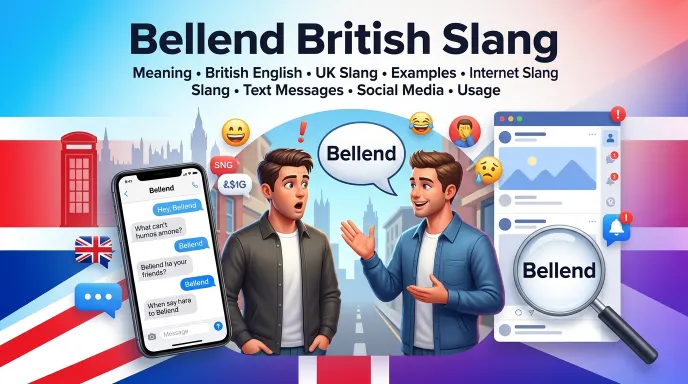
Bellend is a British slang insult that refers to someone who is acting foolish, annoying, arrogant, or inconsiderate. Although the word originally has an explicit anatomical meaning, most people in the UK use it figuratively as a humorous or mildly offensive insult rather than literally.
Depending on the speaker’s tone and relationship with the listener, bellend can range from playful teasing between friends to a genuine insult.
If you’ve heard someone say, “Don’t be such a bellend,” in a British TV show, football match, or online conversation, you might wonder what it really means.
In this guide, you’ll learn the meaning of bellend in British slang, where it comes from, when it’s appropriate (or inappropriate) to use, and how native British speakers use it in everyday conversations.
Bellend British Slang Meaning: Quick Answer (UK Definition & Examples)
Bellend is a British slang term used to describe someone who is behaving like an idiot, fool, or unpleasant person.
While the word comes from an anatomical term, it is now most commonly used as a humorous or insulting nickname.
It is considered informal and mildly offensive, so it should be avoided in professional or formal settings.
| Context | Meaning of “Bellend” |
| Everyday British slang | Foolish or annoying person |
| Friendly banter | Playful insult between friends |
| Angry argument | Mild insult |
| Social media | Calling someone stupid or irritating |
| Workplace | Generally inappropriate |
What Does Bellend Mean in British Slang?
In British slang, bellend is an insult used to describe someone who is acting stupidly, selfishly, or in an irritating way. Unlike many insults, it often focuses on a person’s behavior rather than their intelligence.
For example, if someone cuts in line, ignores common courtesy, or behaves arrogantly, another person might jokingly call them a bellend.
Examples:
- That driver is a complete bellend.
- Stop being such a bellend.
- Only a bellend would do something like that.
Although these examples sound harsh, British speakers sometimes use the word jokingly among close friends. Therefore, the tone of voice is just as important as the word itself.
Bellend as a Humorous Insult
Among friends, bellend can be used in a light hearted way without causing serious offense.
Example:
You forgot your keys again? You bellend!
Here, the speaker is teasing rather than genuinely insulting someone.
Tone: Humorous and informal
Bellend as a Genuine Insult
In an argument, however, bellend becomes much stronger.
Example:
That guy was acting like a complete bellend all evening.
In this situation, the speaker is expressing genuine frustration or criticism.
Tone: Negative and insulting
Literal Meaning vs. Slang Meaning
Originally, bellend is a vulgar anatomical term in British English. However, in modern everyday conversation, most people use it figuratively as an insult rather than with its literal meaning.
Because of this origin, many people still consider the word mildly vulgar, even when it is used jokingly.
Different Meanings of Bellend
Although bellend usually has one core meaning, the tone changes depending on the situation.
Someone Acting uninformed
This is the most common use.
Example:
He locked himself out again. What a bellend.
Meaning: Someone behaving foolishly.
Someone Being Annoying
The word can also describe a person who irritates everyone around them.
Example:
Ignore him he’s just being a bellend.
Meaning: Annoying or inconsiderate behavior.
Someone Acting Arrogantly
Sometimes bellend refers to someone who thinks they’re better than everyone else.
Example:
He never listens to anyone. He’s such a bellend.
Meaning: Arrogant or unpleasant person.
Is Bellend an Insult?
Yes. Bellend is considered an insult in British English. However, the level of offense depends heavily on the relationship between the people involved.
Between Friends
Among close friends, it may simply be playful banter.
Example:
You spilled your drink again, you bellend!
Most friends would understand this as a joke rather than a serious insult.
Between Strangers
Using bellend toward someone you don’t know is much more likely to cause offense.
For example:
- During an argument.
- In road rage situations.
- On social media disagreements.
- During sports rivalries.
In these situations, the word is clearly intended as an insult.
Is Bellend Offensive?
| Situation | Offensive? |
| Close friends joking | Slightly |
| Casual conversation | Sometimes |
| Online arguments | Yes |
| Workplace | Yes |
| School or formal settings | Yes |
| Television comedy | Often used humorously |
Although bellend is not one of the strongest swear words in British English, it is still considered mildly vulgar because of its original anatomical meaning.
For that reason, it’s best to avoid using it in professional settings, with teachers, customers, or people you don’t know well.
Where Is Bellend Commonly Used?
You’ll mostly hear bellend in the United Kingdom, where it has been part of everyday slang for many years.
Although people outside Britain may recognize the word from television, movies, or social media, it remains much more common in British English than in American or other English varieties.
The meaning also changes depending on the situation. Sometimes it is playful banter between friends, while in other cases it is used as a genuine insult.
| Platform or Situation | Common Usage |
| Everyday conversations | Calling someone foolish or annoying |
| British TV shows | Humorous insult |
| Comedy programs | Light hearted banter |
| Football discussions | Friendly or heated insults |
| Social media | Criticizing someone’s behavior |
| Reddit & online forums | British internet slang |
| Workplace | Generally inappropriate |
Everyday Conversations
British people often use bellend when talking with friends or family. In many cases, it refers to someone who has done something silly rather than someone who is genuinely disliked.
Examples:
- You left your wallet at home again? You bellend!
- Don’t be such a bellend.
Among close friends, these examples are usually meant as jokes.
British Television and Comedy
British sitcoms, panel shows, and comedy programs frequently use bellend because it sounds humorous while still expressing annoyance.
Characters may say it after someone makes a foolish mistake or behaves selfishly.
Example:
Only a bellend would think that was a good idea.
Because British comedy often relies on sarcasm and teasing, viewers usually understand the playful tone.
Football and Sporting Events
Football fans sometimes use bellend to criticize players, referees, or rival supporters.
Examples:
- The referee is a bellend.
- That defender played like a complete bellend today.
In these situations, the word is intended as an insult rather than friendly teasing.
Social Media
On platforms like X (formerly Twitter), Reddit, TikTok, and Facebook, bellend often appears in comments about someone’s actions.
Examples:
- That influencer is acting like a bellend.
- Don’t be a bellend in the comments.
Because online conversations lack tone of voice, the word can easily sound harsher than intended.
Real Life Examples of Bellend
Understanding bellend becomes much easier when you see it in realistic conversations.
Friends Joking Together
Jack: I forgot the tickets.
Tom: You absolute bellend!
Here, Tom is teasing his friend rather than trying to offend him.
Family Conversation
Mum: Who left the kitchen light on all night?
Son: Sorry.
Dad: You little bellend.
Among some families, this would be understood as humorous teasing, although not everyone would consider it appropriate.
Football Match
Fan 1: Why did he make that tackle?
Fan 2: Because he’s a complete bellend.
The speaker is criticizing the player’s decision.
Workplace Discussion
❌ Our manager is a bellend.
Although someone might think this privately, saying it openly at work would usually be considered disrespectful and unprofessional.
Social Media Comment
Only a bellend would post something like that.
This example clearly expresses criticism.
Origin and History of Bellend
The word bellend originated in British English as a vulgar anatomical term. Its literal meaning refers to the rounded tip of the male genitalia because its shape resembles a bell.
During the twentieth century, British speakers gradually began using the word figuratively as an insult. Instead of referring to anatomy, it became a way to describe someone behaving foolishly, irritatingly, or selfishly.
By the late twentieth and early twenty first centuries, bellend had become a familiar part of British slang. Television, stand up comedy, football culture, and internet forums helped spread the expression even further.
Today, most British speakers immediately recognize bellend as an insult, while many younger people encounter it through memes, online videos, and British entertainment.
Timeline
| Time Period | Development |
| Early usage | Literal anatomical meaning |
| Mid 1900s | Began appearing as a humorous insult |
| Late 1900s | Became common in British slang |
| 2000s | Spread through television, football, and comedy |
| Today | Popular in British conversations and online culture |
Although the original meaning remains known, the slang meaning is now far more common in everyday conversation.
Why Do British People Say Bellend?
British English is famous for its creative insults, and bellend is one of the best known examples. People often use it because it sounds expressive without being one of the strongest swear words.
Common reasons include:
- To jokingly tease friends.
- To criticize someone’s foolish behavior.
- To express frustration.
- To add humor to conversations.
- To fit the informal style of British banter.
In many friendships, playful insults are a normal part of conversation. However, the same word can become offensive if used with strangers or during arguments.
Similar British Slang Words
Several British slang words have meanings similar to bellend, although each carries a different level of offensiveness.
| Slang Word | Meaning | Tone |
| Idiot | Foolish person | Mild |
| Muppet | Silly person | Humorous |
| Numpty | Foolish person | Friendly |
| Plonker | Idiot | Mild |
| Wally | Silly person | Playful |
| Pillock | Fool | Mildly insulting |
| Twit | Silly person | Light insult |
Bellend vs. Muppet
Both words describe someone acting foolishly.
However:
- Muppet sounds much softer and more humorous.
- Bellend is stronger because of its vulgar origin.
Example:
- Don’t be a muppet. (Playful)
- Don’t be a bellend. (Sharper insult)
Bellend vs. Plonker
Both insults are common in Britain.
However:
- Plonker usually sounds old fashioned and humorous.
- Bellend sounds more modern and slightly more offensive.
Common Misunderstandings About Bellend
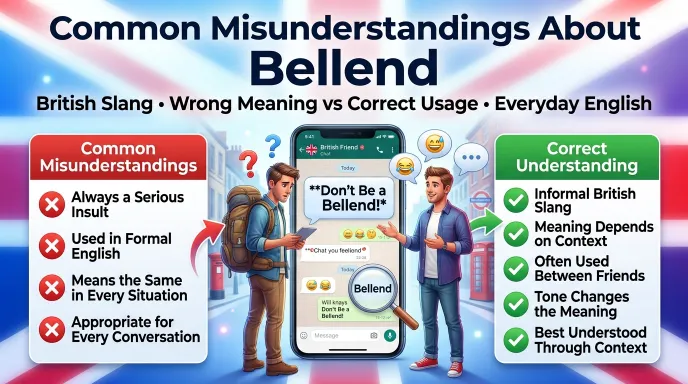
Because bellend is unique to British English, people outside the UK often misunderstand it.
It Always Refers to Anatomy
Not in everyday conversations. Although the word has a literal anatomical origin, most British speakers now use it figuratively to describe someone’s behavior.
It Is Britain’s Strongest Swear Word
No. While bellend is considered vulgar, it is generally milder than many other British swear words.
Everyone Uses It
Not necessarily. Some British people use it regularly, while others avoid it because they consider it rude or inappropriate.
It’s Safe to Use Everywhere
Definitely not. Although friends may joke with the word, it is usually inappropriate in workplaces, schools, customer service, or formal situations.
When Should You Avoid Using Bellend?
Although bellend is a common British slang term, it isn’t suitable for every situation. Because it originated as a vulgar anatomical word and is now used as an insult, it can easily offend people who don’t know you well or who aren’t familiar with British humor.
You should avoid using bellend in the following situations:
- Professional meetings or workplace conversations.
- School, college, or university assignments.
- Emails or formal business communication.
- Customer service interactions.
- Conversations with teachers, clients, or older relatives.
- Public speeches or presentations.
- When speaking with people who may not understand British slang.
Even among friends, make sure everyone is comfortable with playful teasing before using the word. British banter often includes mild insults, but not everyone appreciates that style of humor.
Polite Alternatives to Bellend
If you want to criticize someone’s behavior without sounding rude, there are plenty of milder alternatives.
| Word | Meaning | Tone |
| Silly | Acting foolishly | Friendly |
| Idiot | Foolish person | Mild insult |
| Muppet | Silly person | Humorous (UK) |
| Numpty | Foolish person | Playful (UK) |
| Plonker | Idiot | Light hearted |
| Wally | Silly person | Friendly |
| Fool | Someone acting unwisely | Neutral |
| Twit | Silly person | Mild |
Which Alternative Should You Use?
Choose the word based on your audience.
- With friends: muppet, numpty, or plonker often sound humorous.
- At work: Use neutral words like unprofessional or careless instead of slang.
- In writing: Words such as foolish, thoughtless, or irresponsible communicate the idea more clearly and respectfully.
Using a polite alternative helps you avoid misunderstandings while still expressing your opinion.
Frequently Asked Questions
What does bellend mean in British slang?
In British slang, bellend is an informal insult used to describe someone who is acting foolishly, annoyingly, or arrogantly. Depending on the tone, it can be playful banter or a genuine insult.
Is bellend a swear word?
Not exactly. It is generally considered mildly vulgar because it comes from an anatomical term. Many British people see it as stronger than words like idiot, but less offensive than the strongest swear words.
Is bellend offensive?
It can be. Among close friends, it is often used jokingly. However, when directed at strangers or during arguments, it is likely to be taken as an insult.
Do Americans use the word bellend?
Rarely. Bellend is primarily a British English expression. People outside the UK usually recognize it from British TV shows, films, social media, or online discussions rather than everyday conversation.
Why do British people say bellend?
British speakers often use bellend to criticize someone who is behaving foolishly or to tease friends during casual banter. Its popularity comes from British humor, where playful insults are common among people who know each other well.
Can you call a friend a bellend?
Yes, but only if your friendship includes that kind of joking. Some friends use the word playfully, while others may find it rude. Always consider your relationship and the situation before using it.
Is bellend appropriate at work?
No. Because it is an insult with a vulgar origin, it is generally inappropriate in workplaces, schools, customer service, and other professional environments.
What are similar British slang words?
Some common alternatives include:
- Muppet
- Numpty
- Plonker
- Pillock
- Wally
- Twit
Most of these are milder than bellend, although their tone still depends on the context.
Conclusion
Bellend is one of the best known British slang insults, used to describe someone who is acting foolishly, irritatingly, or arrogantly.
While the word originally had an anatomical meaning, it is now most commonly used as a figurative insult in everyday British English.
Depending on the speaker’s tone and relationship with the listener, it can range from light hearted banter between friends to a genuine expression of annoyance.
Understanding the context is essential. A joke among close friends may be harmless, while using the same word in a workplace, classroom, or argument could easily cause offense.
If you’re watching British TV, listening to UK podcasts, or reading social media posts, knowing what bellend means will help you understand conversations more naturally.
However, if you’re unsure if it’s appropriate, choosing a more polite alternative is usually the better option.
Discover More Articles!
Crash Out Meaning Slang: What Does “Crash Out” Mean on TikTok?
SSA Meaning Slang Urban Dictionary: Definition, Uses & Examples
TS Meaning Slang: What Does “TS” Mean in Text, TikTok & Snapchat?

Hi, I’m Sophia Bennett, a novelist passionate about creating heartfelt stories filled with romance, emotion, and unforgettable characters. Through my books, I hope to inspire readers and take them on journeys they’ll always remember.