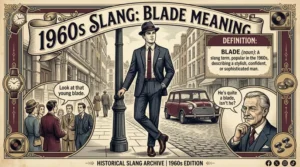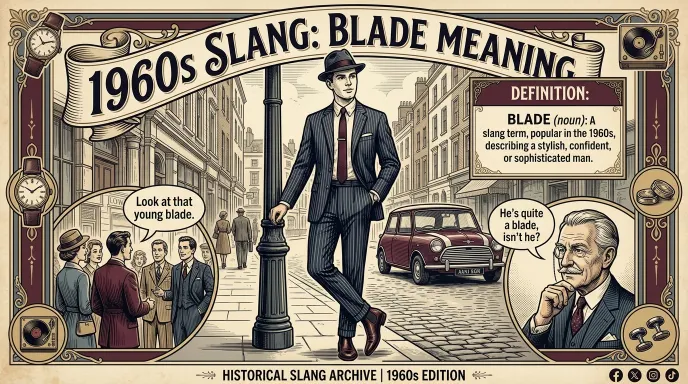
In 1960s slang, “blade” could refer to a fashionable, sophisticated, or streetwise person, especially a young man who was stylish and confident.
The word was not limited to one fixed definition, however, because “blade” had several meanings in older English and slang. Depending on the setting, it could describe someone who was sharp, fashionable, experienced, or socially confident.
The term also appeared in older British and American slang before the 1960s, so it is more accurate to view it as an established older slang word that remained recognizable during the decade rather than as a slang term invented in the 1960s.
What Did “Blade” Mean in 1960s Slang?
Blade Meant a Stylish or Streetwise Person
In older slang, a blade could mean a fashionable, confident, or socially experienced man.
The word could suggest someone who:
- Dressed stylishly
- Had confidence
- Knew how to socialize
- Was experienced with women
- Had a somewhat flashy personality
For example:
“He thinks he’s quite a blade.”
This could describe a man who considered himself sophisticated or fashionable.
The exact tone depended on the speaker. It could be approving, teasing, or slightly mocking.
Quick Answer Table
| Term | Meaning in Older Slang |
| Blade | A stylish, confident, or sophisticated man |
| Era | Used before and during the 1960s |
| Tone | Often playful or approving |
| Type | Older British/American slang |
| Modern use | Less common in this sense |
| Literal meaning | A sharp cutting edge or weapon |
| Formal? | No, when used as slang |
How Was “Blade” Used in the 1960s?
The slang sense of blade was connected with ideas of style, confidence, and worldly experience.
Someone might call a well dressed young man a blade if he appeared confident and socially successful.
For example:
“Look at that young blade in his new suit.”
Here, the speaker is commenting on the man’s stylish appearance and confident image.
Likewise:
“He’s a bit of a blade.”
This could suggest that the person was a ladies’ man or someone who liked showing off his charm.
Was “Blade” British or American Slang?
Blade had a stronger connection with older British slang, although the word also appeared in American English.
The slang sense developed before the 1960s and survived into the decade. Therefore, calling it strictly “1960s slang” can be misleading.
In British usage, “a blade” could describe a young man who was stylish, dashing, or socially confident.
American English also had related uses, although the exact frequency and tone varied by region and period.
Where Did the Slang Meaning Come From?
The slang use of blade is much older than the 1960s.
Older dictionaries and historical slang sources have recorded blade as a term for a person, particularly a fashionable or adventurous man.
The metaphor likely connects the sharpness of a physical blade with a person’s sharp, lively, or stylish character.
Therefore, the 1960s did not create this meaning. Instead, the decade inherited an older slang expression.
Blade as a “Dashing Fellow”
One important older meaning was close to “dashing fellow.”
A blade might be:
- Smartly dressed
- Confident
- Energetic
- Charming
- Socially active
For example:
“That young blade certainly knows how to dress.”
The sentence presents the person as fashionable and self assured.
Blade as a Ladies’ Man
In some contexts, blade could also describe a man who was considered experienced with women.
For example:
“He’s quite a blade with the ladies.”
This meaning suggests charm and romantic confidence.
However, the word did not always have this specific meaning. Calling someone a blade could simply describe their stylish or worldly personality.
Was “Blade” a Positive or Negative Term?
It could be either.
The tone depended on how the speaker used it.
Positive
“He’s a real blade.”
This could praise someone’s confidence, style, or charm.
Teasing
“Look at you, you young blade!”
This could gently tease someone who was dressed up or acting confident.
Negative
“That fellow is too much of a blade.”
Here, the speaker may be suggesting that the person is a show off or overly interested in impressing others.
Therefore, context matters.
Real Life Style Examples
Example One: Fashion
“Tom arrived looking like quite a blade.”
Meaning: Tom looked stylish and confident.
Example Two: Social Confidence
“He’s becoming a real blade around town.”
Meaning: He’s becoming socially confident or worldly.
Example Three: Romance
“That young blade has plenty of admirers.”
Meaning: He is a charming or flirtatious young man.
Example Four: Teasing
“Well, aren’t you a smart looking blade?”
Meaning: You look unusually stylish.
Example Five: Mild Criticism
“He’s a bit too much of a blade for my liking.”
Meaning: The person may be too flashy or self important.
Blade vs Other 1960s Slang
| Slang | Meaning |
| Blade | Stylish or confident man |
| Cat | Cool or socially sophisticated person |
| Hipster | Person connected with a fashionable or alternative scene |
| Square | Conventional or uncool person |
| Groovy | Cool, enjoyable, fashionable |
| Chick | Young woman |
| Daddy O | Cool or fashionable man |
The exact meanings varied by community, age, and region.
Blade vs “Cat”
Cat could describe a cool, fashionable, or socially aware person.
Blade more specifically suggested a stylish or sophisticated man, often with an adventurous or charming image.
For example:
“He’s a cool cat.”
focuses on being cool.
Meanwhile:
“He’s quite a blade.”
can emphasize style, confidence, and worldly sophistication.
Blade vs “Square”
The contrast is useful when understanding older slang.
A blade could represent someone stylish or socially confident.
A square represented someone conventional, old fashioned, or uncool.
Therefore, older slang sometimes used these terms to describe opposing social personalities.
Did Teenagers Use “Blade”?
The word was available to younger speakers, but it was not necessarily universal teenage slang throughout the 1960s.
Its use depended on location, social group, and exposure to older British or American slang.
Some people may have understood the word without using it regularly themselves.
This is important because historical slang dictionaries often record a term without proving that every teenager used it in everyday conversation.
Is “Blade” Still Used This Way Today?
The slang meaning is now largely dated.
Modern speakers are much more likely to understand “blade” as:
- A knife edge
- A cutting tool
- A razor blade
- A sword or weapon
- A flat part of a machine
- A blade of grass
The older slang meaning can still appear in historical writing, period dramas, novels, or discussions about vintage slang.
Therefore, calling someone “a blade” today may sound old fashioned or deliberately humorous.
Common Mistakes About 1960s “Blade” Slang
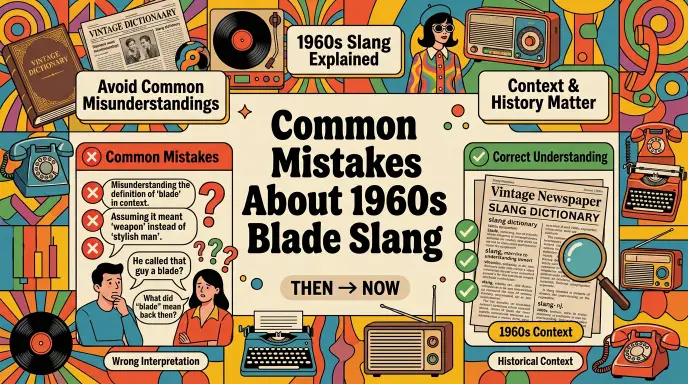
Assuming It Was Invented in the 1960s
It was not. The slang sense existed before the decade.
Assuming It Always Meant a Knife
In slang, blade could describe a person.
Assuming It Always Meant a Ladies’ Man
That interpretation existed in some contexts, but style and sophistication were also important.
Assuming Everyone in the 1960s Used It
Historical slang varied greatly between regions and social groups.
Treating It as Modern Slang
The person related slang sense is now dated.
When to Avoid Using “Blade”
If you’re writing for a modern audience, avoid using blade to mean a stylish man unless you’re intentionally using vintage language.
Modern readers will usually interpret “blade” literally unless the context makes the older meaning clear.
For example:
“He carries a blade.”
Most readers will understand this as a knife or other sharp object.
By contrast:
“He was quite a blade in 1965.”
clearly signals a historical slang meaning.
Is Blade Appropriate at Work?
The older slang meaning is not appropriate for normal professional communication.
It may be suitable in:
- Historical writing
- Fiction
- Period dialogue
- Cultural research
- Discussions of 1960s language
For everyday workplace communication, use clearer modern words such as:
- Stylish
- Confident
- Sophisticated
- Charming
- Fashionable
Why Is 1960s Blade Slang Interesting?
The word shows how slang can survive across generations while gradually changing.
The slang meaning of blade was already old when the 1960s arrived. However, the decade’s changing youth culture introduced many newer expressions, which eventually pushed older terms further out of everyday speech.
As a result, blade provides a useful example of how one word can have:
Older slang meaning → historical usage → modern literal meaning
Key Takeaways
- Blade could mean a stylish, confident, or sophisticated man in older slang.
- The term existed before the 1960s.
- British slang has an especially strong connection with this usage.
- It could sometimes describe a ladies’ man.
- The tone could be positive, playful, or mildly critical.
- The slang meaning is now dated.
- Modern “blade” usually refers to something sharp or cutting.
- Historical context is essential when interpreting the term.
Frequently Asked Questions
What does “blade” mean in 60s slang?
In 1960s slang, “blade” could describe a stylish, sharp-dressed, or sophisticated man. The word suggested someone who looked confident and fashionable.
However, slang changed between communities, so the exact meaning depended on the speaker and context.
What does the slang term “blade” mean?
The slang term “blade” can refer to a fashionable or sophisticated person, particularly in older informal English.
It can also have its ordinary meaning of a sharp edged object, so the surrounding sentence is important when interpreting it.
What are five slang words from the 1960s?
Five recognizable 1960s slang terms are groovy, far out, square, threads, and hippie. “Groovy” meant cool or enjoyable, “far out” expressed excitement or admiration, “square” described an old-fashioned person, and “threads” referred to clothing.
How did people say “cool” in the 60s?
In the 1960s, people often used words such as “groovy” and “far out” to describe something cool, exciting, or impressive.
These expressions became strongly associated with youth culture, music, and the counterculture of the era.
What does “groovy” mean in 1960s slang?
“Groovy” meant cool, excellent, enjoyable, or pleasing. It became one of the best-known expressions associated with 1960s youth and counterculture. Someone might call music, clothing, an event, or an experience “groovy” when they liked it.
What does “far out” mean in 1960s slang?
“Far out” was an expression of excitement, approval, or amazement. During the 1960s, especially within youth and counterculture communities, people used it to describe something unusual, impressive, or exciting.
What did “threads” mean in 1960s slang?
In 1960s slang, “threads” meant clothes or an outfit, especially fashionable clothing. For example, someone could compliment another person’s appearance by talking about their “threads.” The term is now mostly associated with older slang.
What did “square” mean in 1960s slang?
In 1960s slang, a “square” was someone considered conventional, old-fashioned, or out of touch with current youth culture.
The word was often used in contrast with people who embraced newer music, fashion, attitudes, and counterculture trends.
Conclusion
“Blade” was an older slang term that could describe a stylish, confident, sophisticated, or worldly man, including a charming or flirtatious man in some contexts.
Although people sometimes associate it with 1960s slang, the expression actually existed well before that decade.
British English has particularly strong historical ties to this usage. Today, however, this meaning sounds dated, and most people understand “blade” as something sharp or cutting.
If you encounter “blade” in a 1960s novel, film, or historical conversation, context will help you recognize if it describes a person or a literal object.
Discover More Articles!
Belico Meaning Slang: What Does Belico Mean in Spanish Slang?(2026)
Sensationally Successful in Older Slang: Vintage Words & Phrases.
Tuma Slang Meaning: What Does Tuma Mean in Slang?

Hi, I’m Sophia Bennett, a novelist passionate about creating heartfelt stories filled with romance, emotion, and unforgettable characters. Through my books, I hope to inspire readers and take them on journeys they’ll always remember.