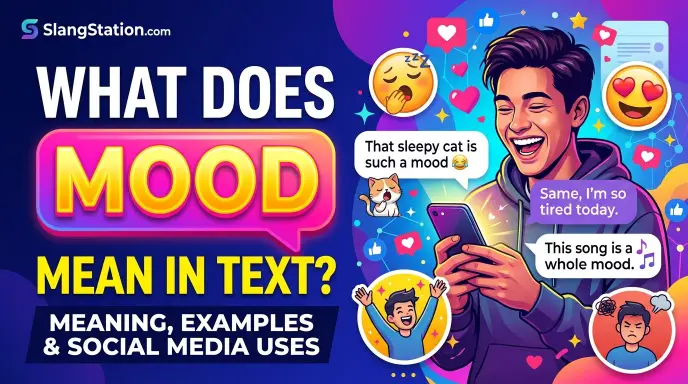
The word “mood” in text means “I feel the same way” or “that is so relatable.” People use it when a message, picture, meme, or situation matches their feelings. It is a short, casual way to show agreement or say, “That is exactly me.”
You may see mood in text messages, TikTok comments, Instagram captions, Snapchat stories, and group chats.
For example, if your friend says, “I want to sleep all day,” you can reply, “Mood!” to show that you feel the same way.
People also use phrases like “big mood,” “whole mood,” and “current mood.” These phrases can show how someone feels, what they want, or how much they relate to a situation.
In this guide, you will learn what mood means in texting, how to use it, and how to reply when someone sends it to you.
What Does Mood Mean in Text Messages?
In texting slang, mood means “same,” “I relate,” or “that describes me perfectly.” It shows that something matches your feelings, thoughts, or current situation.
For example:
Person A: I need a vacation and eight hours of sleep.
Person B means they also feel tired and want a break. They do not need to explain their feelings in a long message. One word says it all.
Here are the main meanings of mood in text:
- I feel the same way: You share the other person’s feelings.
- That is so relatable: A message or situation feels familiar to you.
- That is exactly me: Something describes your current behavior or state of mind.
- I agree: You share the same opinion, wish, or reaction.
The meaning depends on the conversation. If someone texts, “I’m in a bad mood,” they are talking about their feelings in the normal sense. But if they reply “mood” to a funny meme, they are saying they relate to it.
What Does Mood Mean in Slang?
As slang, mood is a quick way to show that something matches your feelings or personality. It often works as a one word response to a funny, sad, or relatable post.
For example, imagine someone shares a picture of a person lying in bed and avoiding all their responsibilities. You might comment, “Mood.” You mean that the picture represents how you feel.
Mood can describe positive and negative feelings. You can use it when you feel happy, tired, hungry, excited, stressed, or lazy.
Here are a few examples:
- “Pizza and a movie? Mood.” :You want the same thing.
- “I hate waking up early. Mood.” :You feel the same way.
- “That sleepy cat is my mood.” :The cat matches how you feel.
- “Big mood!” :You strongly relate to the situation.
Unlike a formal expression, mood sounds relaxed and friendly. It is best for casual chats and social media, not formal emails or school essays.
Common Meanings of Mood and Related Phrases
The word mood can appear in different forms. Understanding the full phrase helps you get the right meaning.
| Phrase | Meaning | Example |
| Mood | I relate to that | “I need a nap.” “Mood.” |
| Big mood | I relate to that a lot | “I could eat pizza every day.” “Big mood.” |
| Whole mood | This perfectly captures a feeling | “That video is a whole mood.” |
| Current mood | How I feel right now | “Current mood: tired.” |
| My mood | My present feeling or vibe | “Rainy days are my mood.” |
| Not in the mood | I do not feel like doing something | “I’m not in the mood to go out.” |
| Such a mood | Something or someone is very relatable | “That sleepy puppy is such a mood.” |
These phrases are related, but they do not always mean exactly the same thing. For example, “big mood” is an emphatic reaction, while “not in the mood” usually means you do not want to do something at that moment.
What Does Mood Mean on TikTok?
On TikTok, mood usually means “this is so me” or “I can relate to this.” People use it in comments, captions, and videos that show familiar feelings or everyday situations.
You might see mood under videos about:
- Being tired after a long day.
- Wanting to stay home instead of going out.
- Feeling excited about food.
- Getting stressed about school or work.
- Laughing at an awkward or embarrassing moment.
- Watching a funny video that matches your personality.
Example:
A TikTok creator posts a video of someone opening a book, reading one line, and falling asleep.
Comment: “Mood 😭”
The commenter means the video feels familiar because they also get tired when studying.
The word can also be used humorously. Someone might comment “mood” under a video of a person dramatically crying over a small problem.
The comment does not always mean the person feels deeply sad. It can simply mean the reaction is funny and relatable.
What Does Mood Mean on Instagram?
On Instagram, mood is often used to describe a feeling, a personal style, or a relatable moment. You may find it in Reels comments, Story captions, photo captions, and direct messages.
For example:
Instagram caption: “Coffee, rain, and no plans. Mood.”
This caption describes a feeling the poster enjoys. It suggests that the picture or moment represents their ideal state of mind.
People also comment “mood” when a Reel shows something they understand or experience themselves.
Example:
Friend: Shares a Reel about wanting to cancel plans and stay home.
You: “Mood 😂”
Your reply means you also want a quiet day at home.
On Instagram, the word can express admiration, humor, agreement, or a shared feeling. The picture or video usually makes the intended meaning clear.
What Does Mood Mean on Snapchat?
On Snapchat, mood usually means that a picture, message, or situation matches how someone feels. Friends may use it in private chats, Story replies, and short captions.
For example:
Friend: “I have done nothing today except eat and sleep.”
You: “Mood.”
You are saying that your day has been similar or that you understand the feeling.
Someone might also post a dark room, a cup of coffee, or a picture of a rainy window with the caption “current mood.” This tells viewers how they feel or what kind of atmosphere they enjoy.
Because Snapchat conversations are usually casual, mood works well as a quick response. However, it does not have a special Snapchat only meaning. The meaning comes from how people use the word in everyday online conversations.
What Does Big Mood Mean in Text?
“Big mood” means that you strongly relate to something. It is a more expressive version of “mood.”
People often use it when a message or situation describes their feelings very well.
Examples:
- “I want to quit everything and travel.” : “Big mood.”
- “Weekends should be three days long.” : “Big mood!”
- “I need food before I talk to anyone.” : “Big mood 😂”
- “Sleeping is my favorite hobby.” :“Big mood.”
The phrase can be serious, funny, or sarcastic. For example, someone who feels exhausted might use “big mood” to show they really need rest. Another person might use it as a joke under a dramatic meme.
In short, mood means “I relate,” while big mood adds extra emphasis.
What Does Whole Mood Mean?
“Whole mood” means that something captures a feeling or situation perfectly. It is often used when a picture, video, person, or action represents a familiar experience.
For example:
Person A: Sends a picture of a dog sleeping under a blanket.
Person B: “That is a whole mood.”
B means the dog perfectly represents their desire to relax and sleep.
You can also use the phrase when a song, outfit, room, or scene matches the feeling you want to express.
For example, “This cozy room is a whole mood” means the room has an atmosphere you really enjoy or relate to.
What Does Current Mood Mean?
“Current mood” means how someone feels right now. It often appears in captions, status updates, and messages paired with a picture, emoji, or video.
Examples:
- “Current mood: hungry.”
- “Current mood: peaceful.”
- “Current mood: ready for the weekend.”
- “Current mood: leave me alone.”
- “Current mood: 😂”
A person might post a picture of a smiling face with “current mood” to show they feel happy. Someone else might post a picture of a sleepy cat to show they feel tired.
The phrase can be literal or humorous. It does not always describe a deep emotion; sometimes it simply shares a person’s vibe at that moment.
Ten Real Texting Examples of Mood
These examples show how people use mood in everyday conversations.
Example One: Feeling Tired
A: I slept for five hours and still feel sleepy.
B: Mood.
Meaning: B also feels tired or understands the struggle.
Example Two: Wanting Food
A: I could eat a whole pizza right now.
B: Big mood 🍕
Meaning: B also wants pizza or feels very hungry.
Example Three: Avoiding Plans
A: I said I was going out, but now I want to stay home.
B: Mood 😂
Meaning: B relates to changing plans because staying home sounds better.
Example Four: School Stress
A: I have three assignments due tomorrow.
B: Mood 😭
Meaning: B understands the stress, perhaps because they have similar work to finish.
Example Five: Loving the Weekend
A: No alarm, no work, and no plans tomorrow.
B: Whole mood.
Meaning: B loves the idea of a free and relaxing day.
Example Six: Feeling Hungry
A: Don’t talk to me until I’ve eaten.
B: Mood.
Meaning: B gets grumpy or quiet when hungry, too.
Example Seven: Enjoying Quiet Time
A: Staying home with a book is my kind of night.
B: Big mood 📚
Meaning: B also enjoys a peaceful night at home.
Example Eight: Relating to a Meme
A: Sends a meme of someone staring at a wall instead of doing their work.
B: That’s literally my mood.
Meaning: B feels the meme accurately describes their behavior.
Example Nine: Sharing a Happy Feeling
A: Finally finished my exams!
B: Mood!! 🎉
Meaning: Depending on their situation, B may share the excitement or relief. The context helps explain the reaction.
Example Ten: Posting a Photo
A: Posts a picture of a cozy bed and a rainy window.
B: Current mood.
Meaning: B is saying the picture represents the kind of feeling or atmosphere they want right now.
How Should You Reply When Someone Says Mood?
When someone texts “mood,” you do not need to give a long reply. Your response can be funny, friendly, or simple, depending on the conversation.
Here are some natural replies.
| Reply | Best use |
| “Same!” | When you feel the same way |
| “Literally me 😂” | When something describes you perfectly |
| “You get it!” | When you want to show agreement |
| “For real.” | When you strongly agree |
| “Big mood.” | When you relate a lot |
| “Right? 😭” | When you agree in a funny or dramatic way |
| “Every single day.” | When the situation happens to you often |
| “Not me too 😂” | When you want to respond playfully |
| “Honestly, same.” | When you want to sound warm and natural |
| “Facts.” | When you strongly agree with the statement |
Funny Replies to Mood
If you are chatting with a close friend, try these playful replies:
- “Stop exposing me 😂”
- “Why is this literally us?”
- “My life in one word.”
- “I feel personally attacked.”
- “You read my mind.”
- “We share one brain cell.”
Use these replies when the conversation is lighthearted. If the other person is sharing something serious, a kind response may work better than a joke.
Is Mood a Good or Bad Word?
Mood is usually a harmless, casual expression. It is not normally rude or offensive when used to show that you relate to a message or situation.
For example, replying “mood” to a friend who says they want to sleep all day is a normal way to show agreement.
However, the tone and situation matter. If someone shares a serious personal problem and you reply only “mood,” they might feel that you are not taking them seriously. A more caring reply, such as “I’m sorry you’re going through that,” may be better.
Also, remember that “I’m in a mood” can have a different meaning from the slang reply “mood.” In everyday English, “I’m in a mood” can suggest that someone feels upset, irritated, or difficult to deal with.
So, mood itself is not a bad word. The important thing is to use it in the right situation.
Who Uses Mood in Texting?
People use mood in casual conversations, especially when reacting to something relatable. It appears in messages between friends, social media comments, memes, and online communities.
You may see it used by:
- Teenagers and young adults reacting to relatable posts.
- Friends agreeing about food, sleep, school, work, or daily life.
- Meme fans responding to funny pictures and videos.
- Social media users describing their feelings through captions.
- Online communities sharing reactions to common experiences.
You do not need to belong to a particular age group to understand or use the word. It is simple, flexible, and easy to understand when the context is clear.
Where Did Mood Slang Come From?
The word mood is much older than internet slang. In ordinary English, it refers to a person’s emotional state or the feeling created by a place, song, or situation.
The slang use grew through online conversations, memes, and social media. The expression became especially visible in the mid 2010s, with use associated with Black Twitter and other online communities. Its exact first use as an internet reaction is difficult to establish.
Over time, people began using “mood” as a complete response instead of writing a full sentence such as “I feel the same way.”
Expressions like “big mood” and “whole mood” developed as ways to make that reaction more expressive.
Today, the word can describe anything from a feeling to a funny image that captures a person’s experience.
Mood vs. Same vs. Relatable
Mood, same, and relatable are similar, but each has a slightly different feel.
| Word | Meaning | Example |
| Mood | This matches how I feel | “I need a nap.” “Mood.” |
| Same | I feel or think that way too | “I love Fridays.” “Same.” |
| Relatable | I understand that experience | “Monday mornings are hard.” “Relatable.” |
| Big mood | I strongly relate to this | “I need a vacation.” “Big mood.” |
| Vibe | A feeling, atmosphere, or style | “This café has a relaxing vibe.” |
All five expressions are common in casual English, but mood often feels more expressive or humorous than a plain “same.”
Common Mistakes When Using Mood
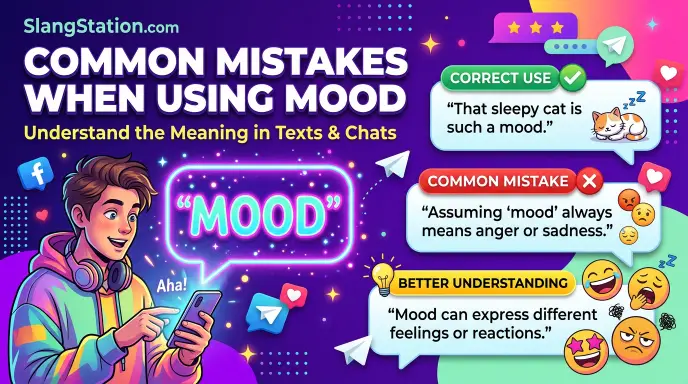
Although mood is easy to use, a few mistakes can cause confusion.
Using Mood in Formal Messages
Mood works best in casual chats. In a formal email, use a clearer sentence such as “I agree” or “I understand how you feel.”
Assuming It Always Means Sadness
Mood does not automatically mean someone is sad or upset. It can express happiness, tiredness, excitement, hunger, or any other relatable feeling.
Confusing Mood With Being in a Mood
A standalone “mood” usually means “I relate to that.” However, “she’s in a mood” may mean she is irritated or upset.
Using It Without Understanding the Context
If someone shares a serious concern, a one word reply might sound dismissive. Read the message carefully before deciding if“mood” is an appropriate response.
FAQs About Mood Meaning in Text
What does mood mean in text messages?
Mood means “I feel the same way” or “that is relatable.” People use it to show that a message or situation matches their feelings.
What does mood mean on TikTok?
On TikTok, mood means “this is so me” or “I relate to this.” It often appears in comments on funny videos, relatable memes, and emotional posts.
Is mood slang?
Yes, mood is used as internet slang when it stands alone as a reaction to something relatable. The word also has its normal English meaning: a person’s state of mind or feelings.
Is mood rude or offensive?
No, mood is not usually rude or offensive. It is a casual expression. Still, using it alone in response to someone’s serious problem may seem dismissive.
How should you reply to mood?
You can reply with “same,” “literally me,” “for real,” “you get it,” or “big mood.” Choose a response that fits the conversation.
What does big mood mean in texting?
Big mood means that you strongly relate to something. It adds emphasis to the shorter slang response “mood.”
What does whole mood mean?
Whole mood means something captures a feeling or experience perfectly. For example, “That sleepy cat is a whole mood” means the cat represents how you feel.
What does current mood mean?
Current mood means how someone feels at that moment. People often use it in social media captions with a photo, video, or emoji.
What does mood mean when a girl texts it?
When a girl texts “mood,” she usually means she relates to what you said or feels the same way. It does not automatically mean she is flirting; the conversation gives you the best clue.
What does mood mean when a guy texts it?
When a guy replies “mood,” he usually means he agrees with your feeling or finds your message relatable. It is not automatically romantic or flirty.
Conclusion
Mood in text means “I feel the same way,” “that is so relatable,” or “that is exactly me.” It is a casual expression used in messages, captions, comments, and online conversations.
You can use mood to react to a funny meme, agree with a friend’s complaint, or describe a feeling. Related phrases such as big mood, whole mood, and current mood add more detail or emphasis.
When you see the word in a message, look at the context. Most of the time, it is simply a quick and friendly way to say, “I get it. Same here.”
DiscoverMore Articles!
What Does NYT Mean in Texting? A Simple Guide(2026)
What Does o7 Mean in Text? Meaning & Examples
What Does NYN Mean in Texting? A Simple Guide(2026)

Hi, I’m Sophia Bennett, a novelist passionate about creating heartfelt stories filled with romance, emotion, and unforgettable characters. Through my books, I hope to inspire readers and take them on journeys they’ll always remember.