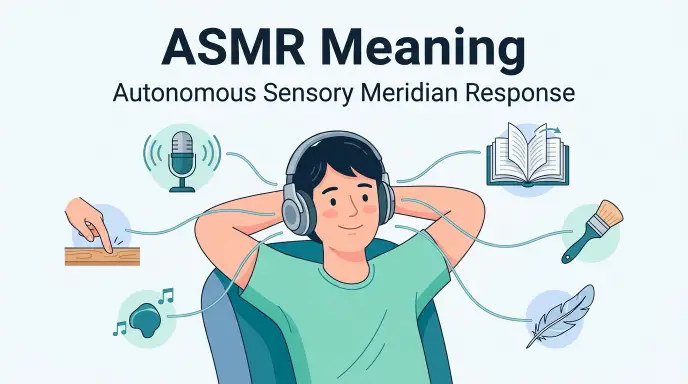
ASMR means Autonomous Sensory Meridian Response. It describes a relaxing feeling that some people get from certain sounds, sights, or gentle actions.
This feeling may start as a pleasant tingling in the head, neck, or back. People often feel calm, sleepy, or relaxed while watching ASMR videos.
ASMR is common on YouTube, TikTok, Instagram, and other social platforms. Popular ASMR content includes whispering, tapping, soft speaking, eating sounds, brushing, page turning, and slow hand movements.
However, not everyone feels ASMR. Some people simply find these sounds relaxing without getting the tingling feeling.
Quick Answer: What Does ASMR Mean?
ASMR means “Autonomous Sensory Meridian Response.” It is a relaxing or tingling feeling that some people experience after hearing or seeing certain gentle sounds and actions.
Common ASMR triggers include whispering, tapping, soft speaking, brushing sounds, and slow movements. ASMR videos are often made to help people relax, reduce stress, or fall asleep.
What Does ASMR Stand For?
ASMR stands for Autonomous Sensory Meridian Response.
The term describes a personal response to certain sounds or visual triggers. The word “autonomous” means that the response happens naturally. “Sensory” relates to the senses, such as hearing and sight. “Response” means the reaction a person has.
In simple terms, ASMR is a calming reaction to certain triggers.
What Does ASMR Feel Like?
ASMR can feel like a soft, pleasant tingling sensation.
For some people, the feeling begins around the scalp. It may then move down the neck or upper back. Others may feel a warm or calming sensation instead.
People may also feel:
- Relaxed
- Sleepy
- Calm
- Comfortable
- Less stressed
- Focused
Not everyone experiences the tingling sensation. That is normal. A person may still enjoy ASMR sounds because they find them peaceful.
Common ASMR Triggers
ASMR triggers are sounds, sights, or actions that may create a relaxing response.
Some common triggers include:
Whispering
Soft whispering is one of the best-known ASMR triggers. A creator may whisper stories, questions, or simple words close to a microphone.
Tapping
Creators may gently tap on objects such as glass, wood, plastic, or books. The small sounds can be soothing to some viewers.
Soft Speaking
Some people prefer a quiet and slow speaking voice instead of whispering. This type of ASMR can feel more natural.
Brushing Sounds
Hair brushing, makeup brushes, and other soft brushing sounds are common in ASMR videos.
Page Turning
The sound of paper moving can be relaxing. Some creators make videos that focus on books, notebooks, or magazines.
Personal Attention
Some ASMR videos pretend that the creator is giving the viewer personal attention. Examples include a pretend haircut, eye exam, skincare session, or relaxing conversation.
Eating Sounds
Food related ASMR often focuses on chewing, crunching, sipping, or other eating sounds. This type is sometimes called mukbang ASMR when it includes large amounts of food and eating content.
Why Do People Watch ASMR?
People watch ASMR for different reasons.
Many viewers use it as a way to relax after a busy day. Others play ASMR videos before bed because the slow sounds help create a calm setting.
Some people also use ASMR while studying or working. However, this depends on the person. Whispering or tapping may help one person focus but distract another.
ASMR can also be simple entertainment. Some viewers enjoy the sounds and creative videos even when they do not experience tingles.
ASMR and Sleep
ASMR is often linked with sleep.
Many people listen to quiet ASMR before going to bed. Soft voices, slow sounds, and gentle movements can create a peaceful atmosphere.
Popular sleep focused ASMR includes:
- Soft whispering
- Rain sounds
- Page turning
- Gentle tapping
- Hair brushing
- Slow speaking
- Guided relaxation
ASMR is not a guaranteed sleep treatment. It is better understood as a relaxation tool that some people find useful.
ASMR on TikTok and Social Media
ASMR has become very popular on social media.
On TikTok, Instagram, YouTube, and similar platforms, creators make short videos with sounds designed to be satisfying or calming.
You may see captions such as:
- “ASMR for sleep”
- “Oddly satisfying ASMR”
- “Relaxing ASMR”
- “ASMR triggers”
- “No talking ASMR”
The meaning stays the same. ASMR refers to the relaxing sensory response or content made to create that type of experience.
Is ASMR a Slang Word?
No, ASMR is not really slang. It is an acronym used to describe a sensory experience.
However, people use “ASMR” casually in online conversations. For example, someone might say:
“This video is pure ASMR.”
They may mean that the video has sounds or visuals that feel very relaxing or satisfying.
Online, “ASMR” can also describe content rather than the feeling itself.
ASMR Meaning in Texting
In texting, ASMR usually has the same meaning: Autonomous Sensory Meridian Response.
For example:
Person A: “Why are you watching that video?”
Person B: “It’s ASMR. It helps me relax.”
Someone may also use ASMR to describe a sound:
“That keyboard sound is ASMR.”
Here, the person means the sound feels relaxing or satisfying.
ASMR Meaning on TikTok
On TikTok, ASMR usually refers to relaxing or satisfying audio and video content.
A TikTok creator may use whispering, tapping, eating sounds, brushing, or other triggers. Some videos focus on realistic sounds, while others use role-play or visual effects.
The term can also be used as a general compliment for a satisfying sound.
For example:
“That rain sound is ASMR.”
This means the sound feels calming or satisfying to the person.
ASMR vs. Satisfying Videos
ASMR and satisfying content can overlap, but they are not exactly the same.
The ASMR focuses on a sensory response, often involving relaxation or tingling.
Satisfying content is broader. It can include cleaning videos, perfect cuts, organized objects, smooth animations, or other visually pleasing moments.
A video can be satisfying without being ASMR.
Is ASMR Only About Sounds?
No. ASMR can involve both sounds and visual triggers.
Sounds are often the main focus, but some people respond to slow hand movements, careful actions, or personal-attention role-play.
For example, watching someone slowly organize objects may feel calming even without much sound.
This is why ASMR content can look very different from one creator to another.
Does Everyone Get ASMR Tingling?
No. Not everyone experiences ASMR tingles.
Some people get a strong tingling sensation. Others feel relaxed but do not notice any tingling. Some people feel nothing at all.
ASMR is a personal response. There is no correct way to experience it.
If you do not get tingles, that does not mean you are watching ASMR “wrong.” You may simply enjoy the sounds for another reason.
Is ASMR Good for Relaxation?
Many people use ASMR as a way to relax.
Quiet sounds and slow movements may help create a peaceful environment. Some viewers use ASMR during bedtime or after stressful activities.
However, the experience varies from person to person. What feels relaxing to one viewer may feel annoying to another.
For that reason, ASMR is best treated as a personal relaxation preference rather than something that works for everyone.
Is ASMR Weird?
ASMR may seem strange if you have never seen it before, but it is a common form of online content.
Whispering into a microphone, tapping objects, or pretending to give someone a haircut may look unusual at first. For people who enjoy ASMR, these actions can create a calming experience.
There is no need to feel embarrassed about liking ASMR. People enjoy many different types of relaxing content.
Common ASMR Examples
Here are some simple examples of how people use the term:
“I watch ASMR before bed.”
This means the person watches relaxing ASMR content before sleeping.
“That sound gives me ASMR.”
The person means the sound creates a pleasant sensory response.
“This keyboard video is so ASMR.”
The person finds the keyboard sounds relaxing or satisfying.
“Do you like ASMR?”
This asks if someone enjoys ASMR content or experiences the sensation.
Common Mistakes When Understanding ASMR
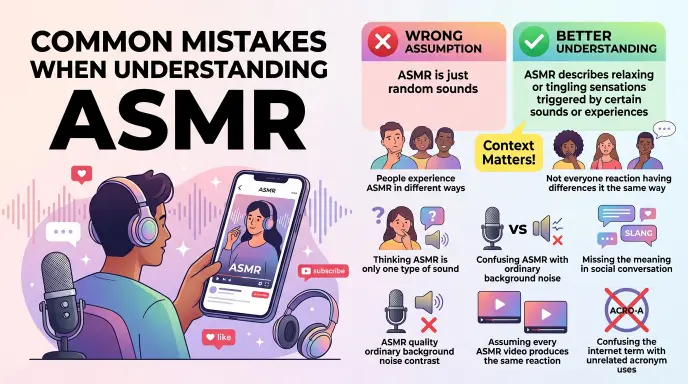
Thinking ASMR Is Only Whispering
Whispering is popular, but it is only one type of ASMR trigger. Tapping, brushing, soft speaking, and visual actions can also be part of ASMR.
Assuming Everyone Gets Tingles
Not everyone experiences the same physical response. Some people only feel relaxed.
Thinking ASMR Is a Slang Word
ASMR is an acronym, not traditional slang. People simply use it often in casual online speech.
Confusing ASMR With All Satisfying Content
Not every satisfying video is ASMR. The two types of content can overlap, but their purpose and effect can differ.
Assuming ASMR Always Means Sleep
Sleep is a common reason people watch ASMR, but relaxation, stress relief, focus, and entertainment are also common reasons.
When Should You Use the Term ASMR?
Use ASMR when talking about content, sounds, or experiences connected to the Autonomous Sensory Meridian Response.
It works well in casual online conversations, video titles, social media posts, and everyday discussions.
Examples include:
- “I found a new ASMR channel.”
- “These sounds are perfect for ASMR.”
- “I like ASMR while studying.”
- “That video gave me chills and ASMR tingles.”
In formal writing, it is best to explain the term the first time you use it.
ASMR Key Takeaways
- ASMR stands for Autonomous Sensory Meridian Response.
- It can describe a relaxing or tingling sensory experience.
- Common triggers include whispering, tapping, brushing, and soft speaking.
- Not everyone experiences ASMR tingles.
- People often watch ASMR to relax or prepare for sleep.
- ASMR is common on YouTube, TikTok, Instagram, and other platforms.
- ASMR is an acronym, not traditional slang.
- Context can show if “ASMR” means the experience or the content.
FAQs
What is ASMR meaning in social media?
On social media, ASMR means “Autonomous Sensory Meridian Response.” It describes a relaxing, tingling feeling that some people get from specific sounds or gentle visual triggers.
ASMR content is popular on platforms such as TikTok, Instagram, YouTube, and Snapchat and often aims to help viewers relax or fall asleep.
Why is ASMR so famous?
ASMR is famous because many people find its soft sounds and calming videos relaxing. Common ASMR content includes whispering, tapping, crinkling, brushing, and slow hand movements. People often watch it to reduce stress, relax, focus, or prepare for sleep.
What is an example of ASMR?
A simple example of ASMR is a video of someone quietly whispering while tapping their fingernails on a microphone.
Other examples include hair-brushing sounds, paper crinkling, keyboard typing, gentle scratching, and carefully opening packages.
What does ASMR mean on Instagram?
On Instagram, ASMR refers to relaxing audio or visual content designed to create a calming or tingling sensation.
You may see ASMR Reels featuring whispering, tapping, eating sounds, makeup application, skincare routines, or other gentle repetitive sounds.
ASMR meaning slang
In slang and online conversation, ASMR usually refers to content or sounds that create a relaxing, calming, or tingling sensation.
It stands for Autonomous Sensory Meridian Response. People commonly use “ASMR” when talking about whispering, tapping, scratching, crinkling, eating sounds, or other relaxing videos.
ASMR meaning TikTok
On TikTok, ASMR refers to videos that use soothing sounds or visuals to help viewers relax or feel a pleasant tingling sensation.
Popular TikTok ASMR includes whispering, tapping, skincare, hair brushing, food sounds, keyboard typing, and satisfying repetitive actions.
ASMR meaning AI
In the context of AI, ASMR still generally means Autonomous Sensory Meridian Response. “AI ASMR” usually describes ASMR
style videos or audio created with artificial intelligence, such as AI-generated sounds, visuals, voices, or satisfying fictional scenarios. The term itself does not have a different slang meaning because AI is involved.
ASMR videos
ASMR videos are videos designed to produce relaxation or a tingling sensation through specific sounds, movements, or visual triggers.
Common examples include whispering, tapping, page turning, brushing, crinkling, cooking sounds, and personal attention roleplays. Not everyone experiences ASMR, so the effect varies from person to person.
Conclusion
ASMR means Autonomous Sensory Meridian Response, a relaxing or tingling feeling that some people get from certain sounds, sights, or gentle actions. Whispering, tapping, brushing, soft speaking, and page turning are common triggers.
The term is now widely used online, especially on TikTok, YouTube, and Instagram. People may use ASMR to describe the feeling itself or the videos made to create that feeling.
If you enjoy ASMR, you are not alone. If you do not feel the tingles, that is normal too. ASMR affects people in different ways.
Discover More Articles!
What Does ASL Mean in Slang? Meaning in Texting and Social Media
5150 Meaning: What Does 5150 Mean in Slang?(2026)
Fugazi Meaning: What Does Fugazi Mean in Slang?

Hi, I’m Sophia Bennett, a novelist passionate about creating heartfelt stories filled with romance, emotion, and unforgettable characters. Through my books, I hope to inspire readers and take them on journeys they’ll always remember.