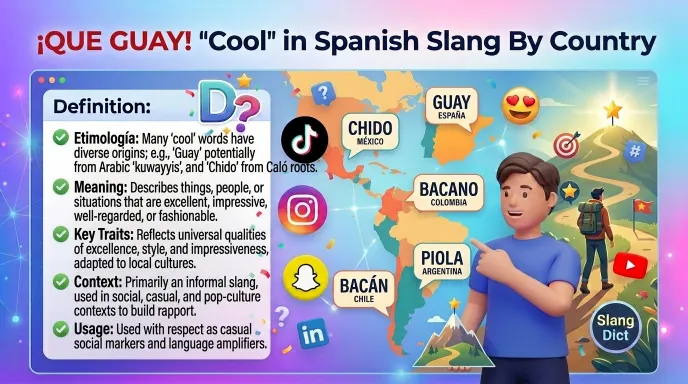
“Cool” in Spanish slang can be translated as “guay” (Spain), “chido” (Mexico), “chévere” (Caribbean and parts of South America), or “bacano” (Colombia), all meaning something is great, awesome, or cool.
Here’s the truth: Spanish has no single word for “cool.” Every country has its own slang, and the word changes as you cross a border. This guide breaks it down country by country, so you can sound like a local instead of a textbook.
How Do You Say “Cool” in Spanish Slang? (Quick Answer)
There’s no single word for “cool” in Spanish. Each country uses its own slang term. Mexico says “chido” or “padre.” Spain says “guay” or “mola.” Colombia and Venezuela say “chévere.” Argentina says “copado” or “piola.” Chile and Peru say “bacán.”
The safest word across most of Latin America is “chévere” most Spanish speakers understand it, even where it’s not native.
Quick Answer Table
| Country/Region | Common Slang Word for “Cool” |
| Mexico | chido, padre |
| Spain | guay, mola |
| Colombia, Venezuela, Panama, Cuba | chévere, bacano |
| Argentina | copado, piola, bárbaro |
| Chile, Peru, Ecuador | bacán |
| Costa Rica | tuanis, pura vida |
| Universal/neutral | genial |
Cool in Mexican Spanish
Mexico uses chido and padre the most. Chido means only one thing: cool. People use it every day, in almost every age group.
- ¿Cómo estás? Chido. (How are you? Cool.)
- Ese carro está chido. (That car is cool.)
Padre literally means “father,” but in Mexico it also means cool. It works across generations, from teens to grandparents. For extra emphasis, people say padrísimo (very cool).
- La fiesta estuvo padre. (The party was cool.)
Cool in Spain
Spain uses guay as the everyday word for cool. It describes places, activities, and situations, and it doesn’t change form for gender or number.
- Ese plan está guay. (That plan is cool.)
Spaniards also use mola (from the verb molar) to say something is cool.
- Me mola tu chaqueta. (I think your jacket is cool.)
Cool in Colombia, Venezuela, Panama, and Cuba

Chévere is the go to word across these countries. It describes people, places, and experiences, and most Spanish speakers understand it even if they don’t use it themselves.
- ¡Qué chévere que ganaste! (How cool that you won!)
- La música en ese bar es chévere. (The music at that bar is cool.)
In Colombia, you’ll also hear bacano used the same way.
Cool in Argentina
Argentina leans on copado, piola, and bárbaro.
- Ese lugar está copado. (That place is cool.)
- Tu amigo es piola. (Your friend is cool/chill.)
Bárbaro literally means “barbaric,” but in Argentina, it flips to mean cool or great.
- ¿Te compraste un auto nuevo? ¡Qué bárbaro! (You bought a new car? How cool!)
Argentina, along with Chile and Mexico, also uses buena onda (“good vibe”) to describe cool or friendly people.
- Sus papás son muy buena onda. (Her parents are so cool.)
Cool in Chile, Peru, and Ecuador
Bacán dominates in these three countries. It works for people, places, and things.
- Ese concierto fue bacán. (That concert was cool.)
- Los chilenos son bacanes. (Chileans are cool.)
Cool in Costa Rica
Costa Rica has its own flavor: tuanis and the famous pura vida.
- Ese lugar es tuanis. (That place is cool.)
Pura vida means “pure life” and works as a greeting, a farewell, and a way to say things are good or cool all at once. It’s one of the most recognized phrases from Costa Rican Spanish.
The Safe, Universal Option: Genial
If you’re not sure which country’s slang to use, genial works almost everywhere. It’s understood across the Spanish speaking world and sounds natural in both casual and semi formal settings.
- ¡Genial! Te veo mañana, entonces. (Cool! I’ll see you tomorrow, then.)
When to Use Formal Language Instead
Slang words for “cool” belong in casual conversation, texting, and social media. In professional or formal settings, switch to standard words instead:
- Genial works in most semi formal contexts
- Estupendo or excelente safer choices for business or academic settings
- Avoid country specific slang like “chido” or “bacán” in job interviews, formal emails, or academic writing
Verdict on professional use: Regional slang for “cool” is casual only. Stick with “genial,” “excelente,” or “estupendo” in professional settings.
Common Mistakes
- Using one country’s slang everywhere. “Chido” sounds natural in Mexico but out of place in Argentina. Match the word to the country.
- Assuming every word is universal. Only “chévere” and “genial” travel well across most of Latin America. The rest are regional.
- Using slang in formal writing. These words belong in speech and texting, not essays or business emails.
- Mixing up similar sounding words. “Bacán” (cool) and “bacano” (also cool, mostly Colombian) are close but not identical in usage across every country.
Key Takeaways
- Spanish has no single word for “cool” it changes by country
- Mexico: chido, padre
- Spain: guay, mola
- Colombia/Venezuela: chévere, bacano
- Argentina: copado, piola, bárbaro
- Chile/Peru/Ecuador: bacán
- Costa Rica: tuanis, pura vida
- Genial works almost everywhere and fits semi formal settings
Frequently Asked Questions
1. What is the most common way to say “cool” in Spanish? There’s no single word used everywhere. “Chévere” and “genial” travel the farthest, but each country has its own preferred slang.
2. How do you say “cool” in Mexican Spanish? Mexicans say “chido” or “padre.” For extra emphasis, they say “padrísimo.”
3. How do you say “cool” in Spain? Spaniards say “guay” or use the verb “molar,” as in “me mola.”
4. Is “chévere” understood outside Colombia and Venezuela? Yes. It started in that region but spread widely, and most Spanish speakers recognize it even if they don’t use it daily.
5. Can I use slang words for “cool” in a job interview? No. Use “genial,” “excelente,” or “estupendo” instead. Regional slang is too casual for formal settings.
6. What does “bacán” mean, and where is it used? It means “cool” and is most common in Chile, Peru, and Ecuador.
7. What does “pura vida” mean in Costa Rica? It literally means “pure life.” Costa Ricans use it as a greeting, a farewell, and a way to say something is cool or good.
8. Is there one Spanish slang word for “cool” that works in every country? Not perfectly, but “chévere” and “genial” come closest, since most Spanish speakers understand both.
Conclusion
There’s no single way to say “cool” in Spanish. Each country built its own slang, shaped by its own culture.
Learn the local word for wherever you’re headed chido in Mexico, guay in Spain, chévere in Colombia, bacán in Chile and you’ll sound like you belong, not like you’re reading from a textbook.
Discover More Articles!
JSP Slang Meaning: Definition, Origin, Uses & Examples
IKTR Meaning in Slang: TikTok, Texting, Instagram & More
SPWM Meaning in Texting, TikTok, and Social Media

Hi, I’m Sophia Bennett, a novelist passionate about creating heartfelt stories filled with romance, emotion, and unforgettable characters. Through my books, I hope to inspire readers and take them on journeys they’ll always remember.