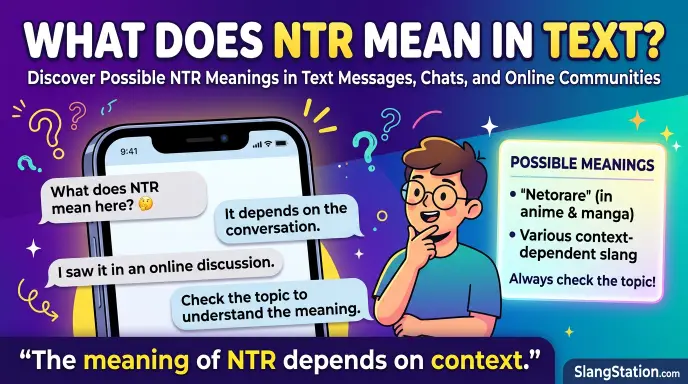
NTR in text can mean different things depending on the conversation. In anime, manga, and online relationship discussions, NTR often refers to “netorare,” a Japanese term for a story involving a romantic partner being taken away or cheating. In other chats, NTR may be a personal abbreviation or have a different meaning.
You may see NTR on TikTok, Reddit, Discord, Instagram, gaming forums, or in private messages. Its meaning depends on the topic and the community using it.
People often search for NTR because they see it in a comment, meme, anime discussion, or message and want to know what the letters mean.
The most important clue is the context: an anime discussion may use NTR differently from an ordinary text conversation.
What Does NTR Mean in Text Messages?
NTR most commonly refers to “netorare” in anime and online relationship related communities.
The term comes from Japanese and is used for fictional stories in which a character’s romantic partner becomes involved with someone else, often causing jealousy, betrayal, or emotional pain.
For example:
A: “Is that anime an NTR story?”
B: “Yes, the plot involves a character’s partner leaving them for someone else.”
Meaning: They are discussing a story involving romantic betrayal.
However, NTR does not have one universal meaning in every text message. If someone uses it in a conversation unrelated to anime, the abbreviation may mean something else.
Is NTR Slang or an Acronym?
NTR is an abbreviation commonly associated with the Japanese term netorare. In online communities, people often use the three letters as shorthand instead of writing the full term.
It is not a standard English texting abbreviation like LOL, BRB, or IDK. Its meaning is more closely tied to specific internet communities and the topics they discuss.
What Does NTR Mean in Everyday Chat?
In everyday chat, NTR may appear when friends discuss anime, manga, fictional relationships, or online memes.
For example:
A: “I heard the new series has NTR.”
B: “Really? I thought it was a normal romance story.”
Here, NTR refers to a story theme, not a general feeling or reaction.
If the conversation does not involve anime or relationships, do not assume this meaning automatically. Ask the sender what they mean if the context is unclear.
What Does NTR Mean on Different Social Media Platforms?
What Does NTR Mean on TikTok?
On TikTok, NTR may appear in anime edits, video captions, memes, and comments about fictional relationships.
For example:
Comment: “I stopped watching when the NTR started.”
The commenter means they stopped watching because the story included a relationship theme they disliked.
The term may also appear in discussions about plot twists, character relationships, or anime recommendations.
Because NTR can refer to adult themes in some communities, check the video’s context before assuming it is suitable for every audience.
What Does NTR Mean on Snapchat?
On Snapchat, NTR could appear in a private conversation about anime, a relationship, or an online trend.
For example:
A: “Have you watched that new anime?”
B: “No, but someone said it has NTR.”
The second person is referring to a possible relationship theme in the story.
NTR is not an official Snapchat feature. It is an abbreviation people may use in their messages.
What Does NTR Mean on Instagram?
On Instagram, NTR may appear in anime fan pages, Reels, comments, or direct messages.
For example:
Comment: “I wasn’t expecting NTR in this series.”
The person is saying that the story included a relationship theme they did not expect.
If you see NTR under an unrelated post, it may have a different meaning. Read the caption and comments for clues.
What Does NTR Mean on WhatsApp?
On WhatsApp, NTR may be used in group chats where friends discuss anime, manga, games, or fictional stories.
For example:
A: “Should I watch this show?”
B: “Only if you’re okay with NTR themes.”
The sender is warning the other person about the show’s relationship content.
In a regular family or work chat, NTR may instead be a personal abbreviation. The surrounding conversation matters.
What Does NTR Mean in SMS?
In an SMS text message, NTR has no single guaranteed meaning. If the sender is discussing anime or fictional romance, it may mean netorare. In another situation, it could stand for a name, phrase, or term understood by the sender.
For example:
A: “What does NTR mean in this review?”
B: “It refers to a relationship theme in the story.”
If you cannot tell what the sender means, asking for clarification is better than guessing.
Real Chat Examples of NTR
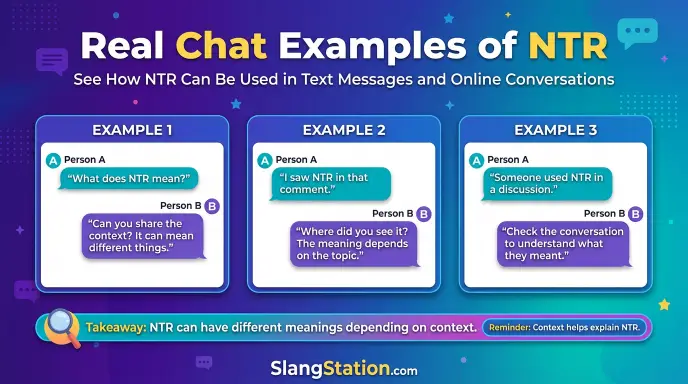
These examples show how NTR might appear in conversations about anime and online culture.
Example One: Discussing an Anime
A: “Have you started the new series?”
B: “Not yet. Does it have NTR?”
A: “Yes, that’s a major part of the plot.”
Meaning: They are discussing if the story includes a netorare theme.
Example Two: Asking for a Recommendation
A: “Can you recommend a romance anime?”
B: “Sure. Do you want to avoid NTR?”
A: “Yes, I prefer stories without cheating.”
Meaning: B is asking if A wants to avoid relationship betrayal themes.
Example Three: Reacting to a Plot Twist
A: “That ending was painful.”
B: “I didn’t expect the NTR either.”
A: “The main character deserved better.”
Meaning: They are reacting to a fictional relationship betrayal.
Example Four: Talking About Manga
A: “Is the manga better than the anime?”
B: “Maybe, but it still has NTR themes.”
A: “I’ll read a review first.”
Meaning: B is warning A about the story’s relationship content.
Example Five: Asking About a Meme
A: “Why are people commenting NTR under this post?”
B: “They think the joke is about a character losing their partner.”
A: “Oh, now I get it.”
Meaning: They are explaining an online joke related to the term.
Example Six: Warning a Friend
A: “I’m going to watch this tonight.”
B: “Just a warning: it has NTR.”
A: “Thanks for telling me.”
Meaning: B is giving a content warning.
Example Seven: Sharing an Opinion
A: “I don’t like stories with cheating.”
B: “Same. NTR plots aren’t for me.”
A: “I prefer happy endings.”
Meaning: Both people are discussing their preferences in fictional stories.
Example Eight: Asking for the Meaning
A: “What does NTR stand for?”
B: “In anime discussions, it usually refers to netorare.”
A: “Thanks, I saw it in a comment.”
Meaning: They are explaining the abbreviation.
Example Nine: Discussing a Character
A: “Why is everyone upset with that character?”
B: “The story involves NTR and betrayal.”
A: “That explains the comments.”
Meaning: They are talking about a character’s role in a relationship focused plot.
Example Ten: An Unclear Message
A: “NTR?”
B: “Do you mean netorare, or something else?”
A: “I meant the anime term.”
Meaning: The conversation shows why context is important when an abbreviation appears by itself.
How Should You Reply When Someone Says NTR?
Your reply depends on the conversation. If the sender is discussing anime or manga, you can respond to the story or ask what kind of content they mean.
Funny Replies
- “Why does every plot have to hurt? 😂”
- “I just wanted a peaceful romance.”
- “That plot twist needs a warning label.”
- “My favorite character can’t catch a break 😭”
Use these replies only when you understand the context and feel comfortable joking about it.
Casual Replies
- “Oh, I see.”
- “Is that a major part of the story?”
- “Thanks for the warning.”
- “I’ll check the reviews first.”
Friendly Replies
- “Thanks for letting me know.”
- “Can you explain what happens without spoilers?”
- “Is the story still worth watching?”
- “Do you know another series without that theme?”
Neutral Replies
- “What does NTR mean here?”
- “Are you referring to the anime term?”
- “Can you explain what you mean?”
- “Is that an abbreviation for something?”
If you are unsure, ask for clarification. NTR is not as universal as common texting terms, so a short question can prevent a misunderstanding.
Is NTR Rude or Offensive?
NTR is not automatically a rude word, but its subject matter can be sensitive. In anime and online fiction discussions, it often refers to relationship betrayal and may be associated with adult oriented content.
if it is appropriate depends on the audience and the situation.
- With friends: It may be fine if everyone understands the term and is comfortable with the topic.
- At school: Avoid bringing up adult oriented content in class or in conversations where it may make others uncomfortable.
- At work: It is usually better to avoid niche or adult related terms in professional messages.
- In public comments: Consider the audience before discussing sensitive story themes.
The abbreviation itself is not necessarily an insult. However, using it to mock someone who has experienced a real relationship problem would be unkind.
Who Uses NTR?
NTR is most familiar to people who take part in anime, manga, and related online communities. It may appear among adult fans, online reviewers, gamers, and people discussing fictional relationship plots.
Does Gen Z Use NTR?
Some Gen Z users may encounter NTR through anime videos, memes, Reddit discussions, or online fan communities. However, it is not a slang term used by every young person.
People who do not follow anime related communities may not recognize it at all.
Where Is NTR Most Likely to Appear?
You may encounter NTR in:
- Anime and manga discussions
- Online reviews and recommendation lists
- Fan forums and community posts
- Memes about fictional relationships
- Social media comments
- Private chats between fans
There is no reliable basis for saying that everyone on a particular platform uses NTR frequently. Its visibility depends on the community and the content being discussed.
Where Did NTR Come From?
NTR comes from netorare, a Japanese term associated with stories about a romantic partner becoming involved with someone else.
The word is linked to Japanese fictional media and has become recognizable in some anime, manga, and online fan communities.
Internet discussions often shorten longer terms to make them easier to type. NTR became a convenient shorthand in communities familiar with the term.
The abbreviation spread through online discussions, reviews, fan conversations, and posts about fictional relationship themes. However, its use is not universal across the internet.
It is important to separate the established association with netorare from other possible meanings of the letters NTR.
If the abbreviation appears in a different setting, it may have nothing to do with anime or relationships.
NTR vs. IDK, IDC, IMO, and BRB
NTR differs from common texting abbreviations because its meaning is tied to a particular topic.
| Term | Meaning | Type | Usage | Popularity |
| NTR | Often netorare in anime communities | Topic specific abbreviation | Discussing certain fictional relationship themes | Recognized in relevant fan communities |
| IDK | I don’t know | Text abbreviation | Showing uncertainty | Widely used in casual chats |
| IDC | I don’t care | Text abbreviation | Showing a lack of concern or preference | Widely used in informal messages |
| IMO | In my opinion | Text abbreviation | Sharing a personal view | Common in online discussions |
| BRB | Be right back | Text abbreviation | Saying you will return shortly | Common in chats and gaming |
For example, “IDK if I’ll watch it” means the sender is unsure. “IMO, the story is too sad” introduces an opinion. But “This show has NTR” refers to a specific story theme if the anime meaning is intended.
Real World Usage Example
Imagine two friends are choosing an anime to watch over the weekend. One friend prefers light romance stories and does not enjoy plots involving cheating or relationship betrayal.
The friend sends a message:
“Does this anime have NTR? I don’t want a sad romance.”
The other friend replies:
“Yes, it has that theme. You might prefer another series.”
In this situation, NTR helps the friends describe a type of story content quickly. It is not being used as an insult or a general reaction.
Now imagine someone sees NTR in a message about work or a completely unrelated subject. They should not assume it means netorare. They should check the context or ask what the abbreviation stands for.
Frequently Asked Questions
What does NTR mean in text messages?
NTR often means “netorare” in anime and relationship related online communities. In other conversations, it may have a different meaning.
What does NTR mean on TikTok?
On TikTok, NTR may refer to netorare in anime videos, edits, captions, or comments about fictional relationships.
Is NTR slang?
NTR is a topic specific abbreviation associated with the Japanese term netorare. It is not a general English texting abbreviation like LOL or BRB.
Is NTR rude or offensive?
The abbreviation is not automatically offensive, but its subject matter can be sensitive or adult oriented. Consider your audience before using it.
How should you reply to NTR?
If you understand the context, respond to the conversation. If you do not, ask, “What does NTR mean here?”
Conclusion
NTR often means “netorare” in anime, manga, and online relationship discussions. It refers to a fictional relationship theme involving a romantic partner becoming involved with someone else. You may see it on TikTok, Reddit, Discord, Instagram, or in private chats.
However, NTR can have other meanings outside those communities. It is not a universal texting abbreviation, so context matters.
Use the term when you know the other person understands it and the topic is appropriate. If you are unsure what someone means, ask for clarification rather than guessing.
Discover More Articles!
What Does OB Mean in Text? Meaning, Uses & Examples(2026)
What Does Mean in Text? Meaning, Uses & Examples(2026)
What Does “OBG” Mean in Text? Common Uses Explained

Hi, I’m Sophia Bennett, a novelist passionate about creating heartfelt stories filled with romance, emotion, and unforgettable characters. Through my books, I hope to inspire readers and take them on journeys they’ll always remember.